



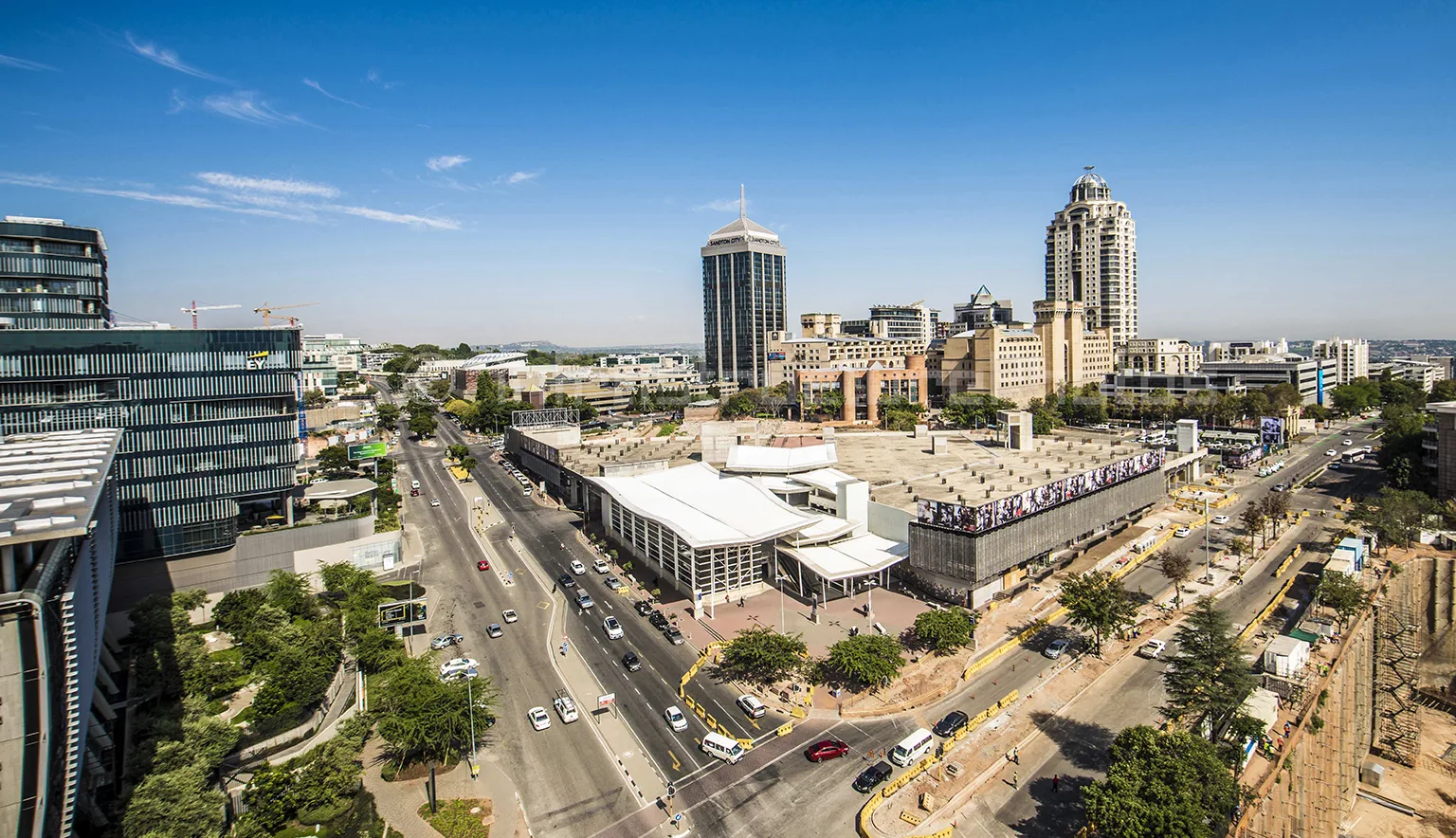

Coalescing abundant cultural heritage with ravishing natural splendour and an exquisite spectrum of entertainment, the South African province of Gauteng boasts an irresistible offering for all.
GAUTENG
Gauteng, the vibrant beating heart of South Africa (SA), offers a unique blend of culture, leisure, sports, and awe-inspiring natural beauty.
When nine new provinces were named in the wake of the nation’s first democratic elections in 1994, a part of the former Transvaal province became Gauteng, a Sesotho word meaning ‘place of gold’.
The fitting name honours the gold-bearing Witwatersrand, a mountainous quartzite ridge that runs east to west across Gauteng.
Although SA’s smallest province, it is the country’s richest and most densely populated, standing proudly as the economic heart of the nation.
Gauteng, influenced by the increased centralisation of modern cities, is divided into five regional municipalities – Johannesburg, Tshwane (Greater Pretoria), Ekurhuleni (the East Rand), the West Rand, and Sedibeng.
It’s a cosmopolitan paradise of fun, warm, and unique people who come together to make all visitors feel welcome.
Home to world-class entertainment venues, fine restaurants, day spas, boutique hotels, authentic African craft markets, and fantastic jazz venues, Gauteng has it all.
From shopping malls, African street markets, and café societies to restaurants, upmarket shebeens, and the great outdoors, this is a province that offers instant gratification and no dull moments.
Gauteng is fondly known for its vast array of restaurants and local fare, boasting a diverse spectrum of flavours and cultural influences, from home-grown boerekos (farmers’ food) and authentic African cuisine to Thai, Portuguese, Italian, Cape Malay, and more.
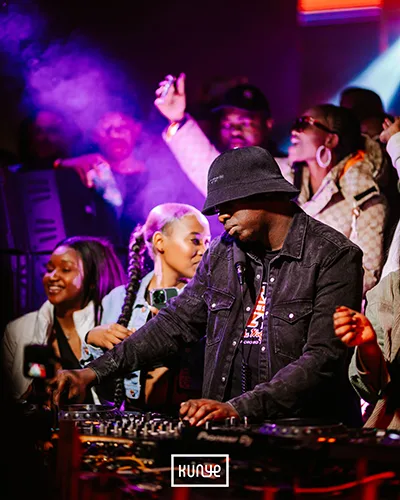
As a top-tier destination to watch musical icons from across the globe, or spectate the pinnacle of sporting excellence, Gauteng’s dedication to vibrant energy and entertainment is unrivalled.
Alternatively, for those captivated by history and the story of SA, one of the most significant recent developments has been the declaration of the Nelson Mandela Legacy Sites.
This serial world heritage property consists of 14 unique sites across the nation, several of them in Gauteng. Designated as UNESCO World Heritage Sites, they collectively reflect the country’s long struggle for human rights, liberation, and reconciliation.
What makes these places so powerful is that they are no longer only understood as South African heritage sites; they are now part of a shared global story.
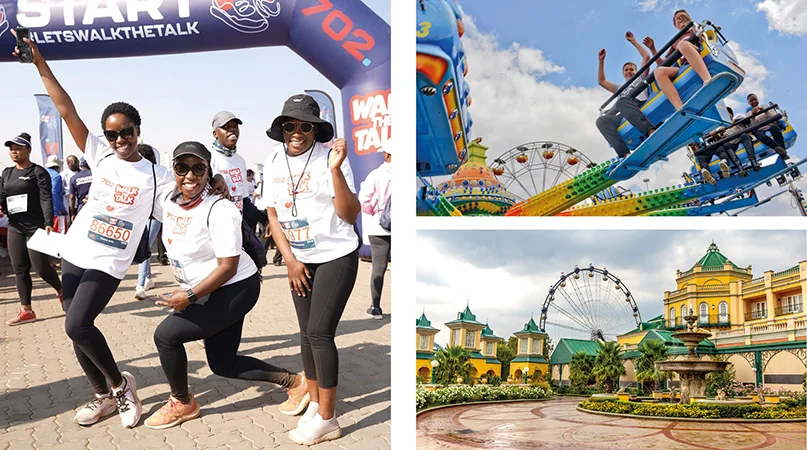
Q&A WITH THE GAUTENG TOURISM AUTHORITY
The mission of the Gauteng Tourism Authority is to develop, promote, coordinate and facilitate responsible and sustainable tourism in the Gauteng global city region, and to create a world-class destination that attracts business visitors and all other tourists to the province, benefits its people, and contributes to job creation and economic growth. We sit down with Barba Gaoganediwe, Head of Destination Marketing and Communications.
Firstly, could you introduce us to the authority and describe where tourism finds itself today in SA?
Barba Gaoganediwe, Head of Destination Marketing and Communications (BG): Today, SA’s tourism landscape has been transformed from a propaganda machine that once promoted experiences for only a privileged few – under apartheid, many spaces and places were inaccessible to the majority of the population.
The Urban Areas Act, for example, made it impossible for people of colour to be in central business districts after certain hours without permits. Tourism in those years, when SA was isolated by the world because of its apartheid policies, was therefore entirely different from what it is today.
At the same time, the legacy of apartheid still lingers. Amongst the many sectors that make up the nation’s economy, tourism, travel, and hospitality remain some of the least transformed.
However, as SA reopened to the world, rejoined the global community, and adopted transformative policies, the tourism landscape had to recalibrate. Those who were already active in the sector were not removed, but it became necessary to introduce transformation policies that would bring into the mainstream those who had previously been excluded.
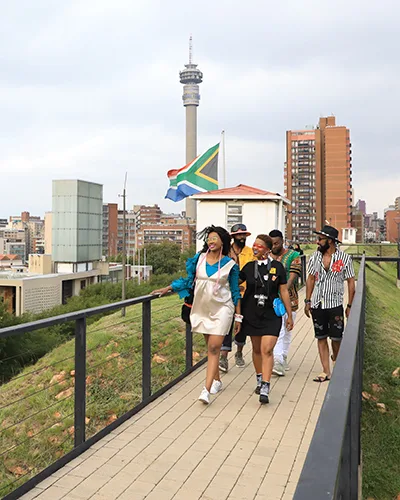
This has also changed how places are understood. Areas that were once seen simply as places where people lived and slept, such as Soweto, Atteridgeville, and Mamelodi, are now recognised as rich centres of cultural expression.
Modern travellers are increasingly drawn to these kinds of experiences. The days when tourism was driven only by beaches, wildlife, and mountains are gone. Today, people and culture are central to the travel experience.
Is this also the case for Gauteng as a vital part of SA’s tourism offering?
BG: This is particularly important in Gauteng. Although it is the smallest province by landmass, it is the largest by economic value, contributing just under a third of SA’s GDP and almost eight percent of Africa’s GDP.
If Gauteng were a country, it would rank amongst the largest economies on the continent. For that reason, South African tourism cannot grow without Gauteng playing a central role. The province may not have extensive coastlines or mountain ranges, but modern tourism is increasingly driven by people, and with a population of around 16.5 million, Gauteng sits at the heart of the South African travel experience.
The province accounts for more than 55 percent of all international arrivals into SA and we have now crossed the 10 million international arrivals mark again after several years of setbacks caused by the COVID-19 pandemic and wider global economic and geopolitical instability.
SA also remains a compelling value-for-money destination. Favourable exchange rates, combined with a growing portfolio of high-quality experiences, continue to make the country attractive to international visitors.
Additionally, whereas Gauteng was once mainly a transit point for travellers heading on to Kruger National Park or Cape Town, average stays have increased from around nine days to 13 – evidence that Gauteng is increasingly being experienced as a destination in its own right, where people can work, stay, and play.
So, despite the setbacks caused by the COVID-19 pandemic, slow economic growth, and global conflict, the South African tourism landscape remains healthy and full of opportunity.
The authority describes Gauteng’s townships as the essence of the location and its heart and soul, can you elaborate on this?
BG: You cannot talk about Gauteng’s tourism experience without talking about its townships. They are the heart and soul of the province, and they are where most of our 16.5 million residents live. Soweto alone has a population of more than three million, larger than some entire countries, and it remains central to the story of SA.
Visitors today are not only looking for monuments – they want to meet people, experience culture, and understand how communities live, create, and celebrate.
Places such as Atteridgeville, Mamelodi, and Sharpeville deserve much more attention in that regard. They carry deep historical memory, but they are also places of energy, creativity, and economic potential.
They show how Gauteng’s visitor offering extends well beyond its best-known attractions and into communities that continue to shape the province’s identity in real and meaningful ways.

“Visitors today are not only looking for monuments – they want to meet people, experience culture, and understand how communities live, create, and celebrate”
Barba Gaoganediwe, Head of Destination Marketing and Communications, Gauteng Tourism Authority
What role does the authority play in growing Gauteng and SA as tourist destinations?
BG: We understand that our role extends beyond the province itself. Our responsibility is to ensure that Gauteng grows strongly enough to help propel SA’s wider tourism growth. Because of the province’s economic weight and contribution to national GDP, its performance matters to the whole country.
With the adoption of the national Tourism Growth Partnership Plan and the Gauteng Economic Growth and Development Plan, which identifies tourism and hospitality as one of 12 key sectors, we believe we are moving in the right direction and are back to pre-pandemic levels of tourism.
Through structural reform and resilience, we can now see a pathway towards 15 million international arrivals for SA overall, with Gauteng playing a crucial role in that growth.
As people visit us, whether as sports teams, cultural groups, or entertainment artists, we now have the capability to play host to them at a very high level. Over the past few months, we have seen many international acts on world tours include Johannesburg and Pretoria in their schedules. That is not a coincidence.
It reflects a deliberate strategy of bidding for and hosting major events, whilst reusing the infrastructure built for the 2010 FIFA World Cup and other large sporting occasions to stage high-quality events for internationally renowned performers.
That gives you a sense of the 360-degree approach we are taking. We use sport and entertainment not only to attract attention, but also to confront challenges directly.
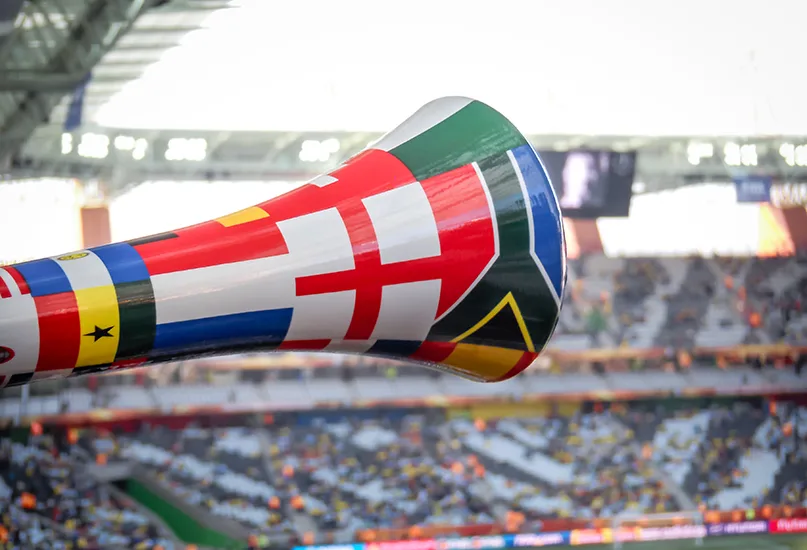
“We helped deliver what FIFA have, and many pundits still, declare as one of the greatest, most iconic World Cups ever, for SA, in 2010”
Barba Gaoganediwe, Head of Destination Marketing and Communications, Gauteng Tourism Authority
Finally, what are you most proud of in terms of the legacy that the authority has created so far?
BG: We’re proud to say that we’ve contributed towards a coherent African tourism agenda, but we also think we can do even better than what we have done over the last decades.
As well as this, we’ve been helping the preservation of the Cradle of Humankind World Heritage Site, continuing to preserve this wonder for the rest of the world and use its content, findings, and discoveries to tell the story that humanity started right here on the African continent.
This hard work has led to the ‘Out of Africa’ concept, theorising that most human ancestors originated from one general spot within Africa.
We are really proud of playing a key role in being an integral part of the 2002 World Summit on Sustainable Development at a time when sustainable development was not even on the lips of anyone.
Elsewhere, we helped deliver what FIFA have, and many pundits still, declare as one of the greatest, most iconic World Cups ever, for SA, in 2010.
SPORTS TOURISM IN FOCUS
SA is one of the greatest and most iconic places on the planet to come and watch sport and it is amongst the very few countries that have held World Cups for all three of its major sports – cricket, football, and rugby union.
SA hosted the 1995 Rugby World Cup, 2003 International Cricket Council (ICC) Cricket World Cup, 2007 ICC World Twenty20, and the football 2010 FIFA World Cup.
Gauteng has invested heavily in positioning itself as an attractive sports tourism destination with world-class infrastructure and a comprehensive sports offering.
Later this year, Gauteng will play host to the latest Springboks versus All Blacks test in Johannesburg – New Zealand against SA in rugby union – which will be staged at FNB Stadium, one of the country’s great sporting arenas.
This is not just a rugby match – it is a global showcase for SA and Gauteng’s sporting and entertainment capabilities.
Looking ahead, SA is also preparing to host the 2027 ICC Cricket World Cup, with venues such as the Wanderers Stadium in Johannesburg and SuperSport Park Stadium in Centurion expected to play a prominent role across Gauteng.
The Soweto Derby, meanwhile, is a football match involving Soweto-based teams Kaizer Chiefs and Orlando Pirates and usually attracts huge crowds. Over the years it has become an entire weekend experience not to be missed.
Elsewhere, Liv Golf in SA is now a major multi-year international tournament that brings elite golf and top global players to African soil.
OUTLOOK RECOMMENDS
Eat:
FOR FINE DINING…
Marble Restaurant (Marble) is a celebration of quintessential South African fare and open-fire cooking. Widely considered one of the best restaurants in Johannesburg, Marble offers diners something different – not just a plate of food, but a theatre of experience. It celebrates the deep-rooted South African tradition of cooking over flames – and not just meat, but all types of ingredients cooked on coals – including fish, poultry, vegetables and breads.
FOR EATING LIKE A LOCAL…
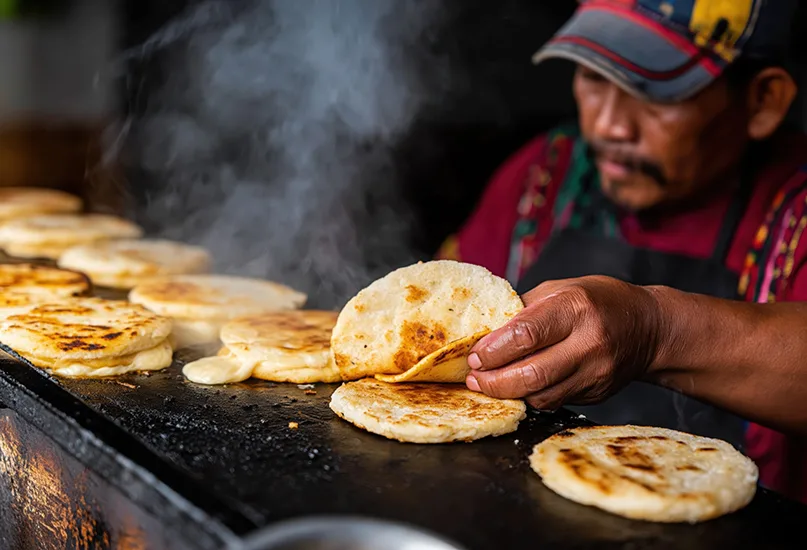
Gauteng’s market culture has expanded significantly over the past decade, and the weekend food market circuit is now a genuine institution for residents and a revelation for visitors who stumble across it. Play Braamfontein has evolved into one of the city’s most iconic destinations. With a few years of unforgettable events, curated experiences, and legendary spaces behind it, this venue continues to set the standard for Johannesburg’s creative and culinary scene.
Do:
FOR AFFORDABLE TRANSPORT SERVICES…
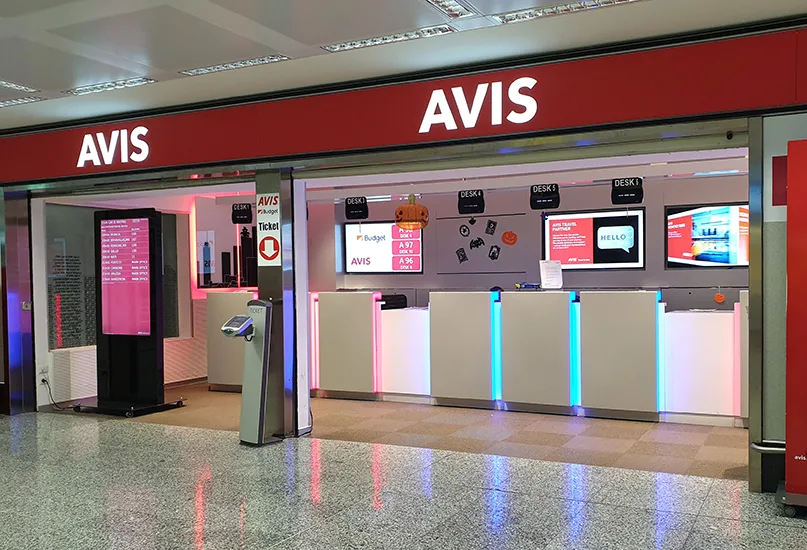
AVIS offers conveniently situated branches in major centres such as Johannesburg and Pretoria as well as numerous other locations, ensuring that visitors have access to quality rental cars when travelling across the province.
AVIS offers the perfect variety of rental vehicles to suit every occasion. Coupled with high standards of quality – including low mileage and regular maintenance – and great pricing, your transport needs will be taken care of.
Upon arrival at O.R. Tambo International Airport (JNB), hiring a car has never been easier. AVIS is ideally located as the first car rental kiosk on the left as you enter the ground floor of the parking lot opposite domestic arrivals. Open 24 hours a day, you will always be greeted with a smile no matter what time you arrive.

FOR AN INFORMATIVE ADVENTURE…
Located in the Cradle of Humankind World Heritage Site, Lesedi Cultural Village offers a fascinating exploration of Africa’s tribal history entwined with sumptuous hospitality.
Named after King Moshoeshoe’s inspired words, “Our culture is the light of our nation”, Lesedi Cultural Village transports guests on an illuminating and enthralling historical adventure. Visitors will be immersed in a historical tour de force that connects the past with the present and shines a light on our collective humanity.
Sleep:
FOR A HILLSIDE PARADISE…
Four Seasons, The Westcliff, Johannesburg, is the ultimate destination for a luxurious stay high up on the rocky Witwatersrand ridge.
Despite being in the middle of SA’s largest city, the hotel feels like a chic hillside village, with nine sun-splashed villas woven with courtyards, fountains, and breathtaking gardens.
LANDMARK ATTRACTIONS
Cradle of Humankind World Heritage Site
One of Gauteng’s defining attractions and amongst the most important paleoanthropological landscapes in the world, the Cradle of Humankind World Heritage Site is recognised for having the largest known concentration of human ancestral remains anywhere on Earth, and continues to draw anthropologists, scientists, and researchers from around the world. Here, the landscape is dotted with subterranean limestone caves that have turned up a rich fossil record for human evolutionary studies.
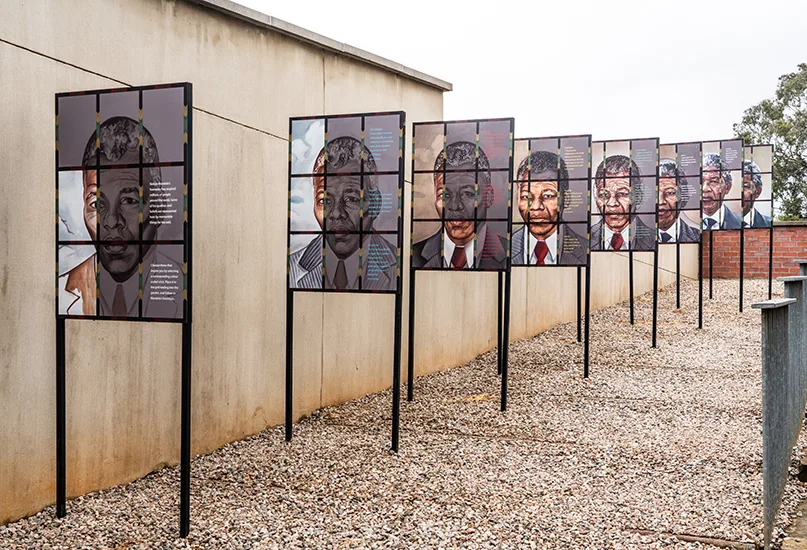
Apartheid Museum
Opened in 2001, the Apartheid Museum is acknowledged as the most distinguished museum in the world dealing with and illustrating 20th century SA, at the heart of which is the rise and fall of the apartheid story. Architecturally breathtaking, the museum is a superb example of design, space, and landscape offering a unique experience. The exhibits have been assembled and organised by a multidisciplinary team of curators, filmmakers, historians, and designers.
Constitution Hill
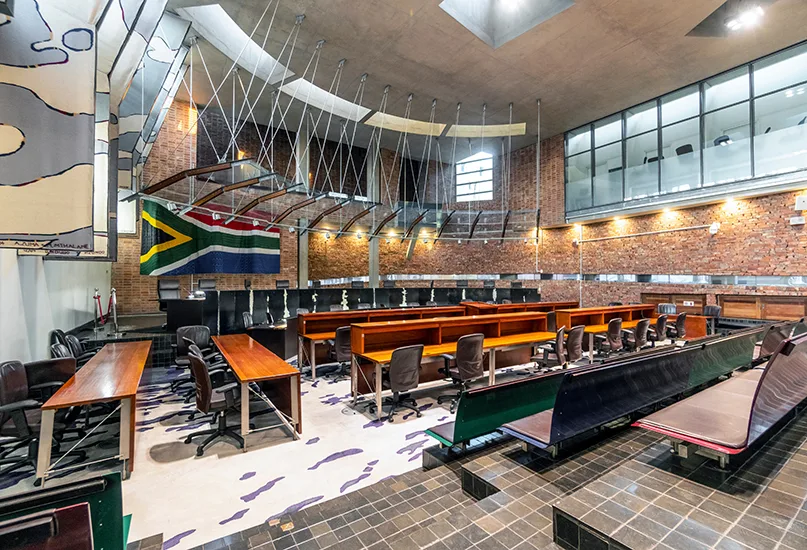
Constitution Hill is a living museum that tells the story of SA’s journey to democracy. The site is a former prison and military fort that bears testament to the nation’s turbulent past and, today, is home to the Constitutional Court, which endorses the rights of all citizens. There is no other incarceration site in SA that imprisoned the sheer number of world-renowned men and women as those held within its walls.
GETTING THERE AND AROUND
Getting to Gauteng by air means flying into JNB, the primary international hub and busiest airport across the entire continent. Located about 30 to 40 minutes east of central Johannesburg, from here you can fly to pretty much every substantial city in SA.
The smaller Lanseria International Airport (HLA) also handles domestic regional flights.
By bus, long-distance, reputable lines like Intercape or Greyhound connect Gauteng with major cities across SA, typically arriving at Johannesburg’s Park Station or Pretoria.
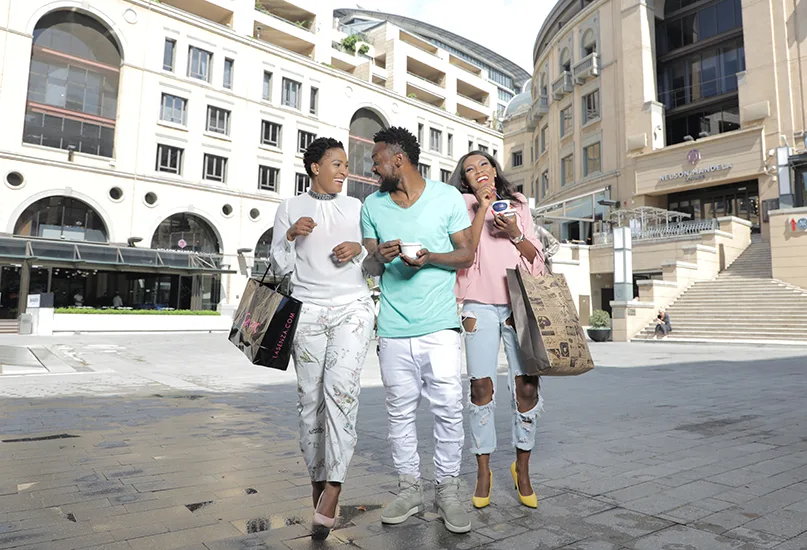
Elsewhere, travellers can utilise the Gautrain – this rapid rail network is the safest and most efficient way to travel between JNB, Sandton, Rosebank, Midrand, and Pretoria. Stations are secure, and you can purchase a reloadable Gold Card at any stop.
Once in Gauteng, for seeing major sights like the Apartheid Museum, Constitution Hill, and Soweto safely, the City Sightseeing open-top buses provide a secure and informative way to explore.
To get around locally, rely on ride-sharing apps like Uber or Bolt for safety and convenience. Car rentals are also available through major companies such as AVIS and Hertz.