


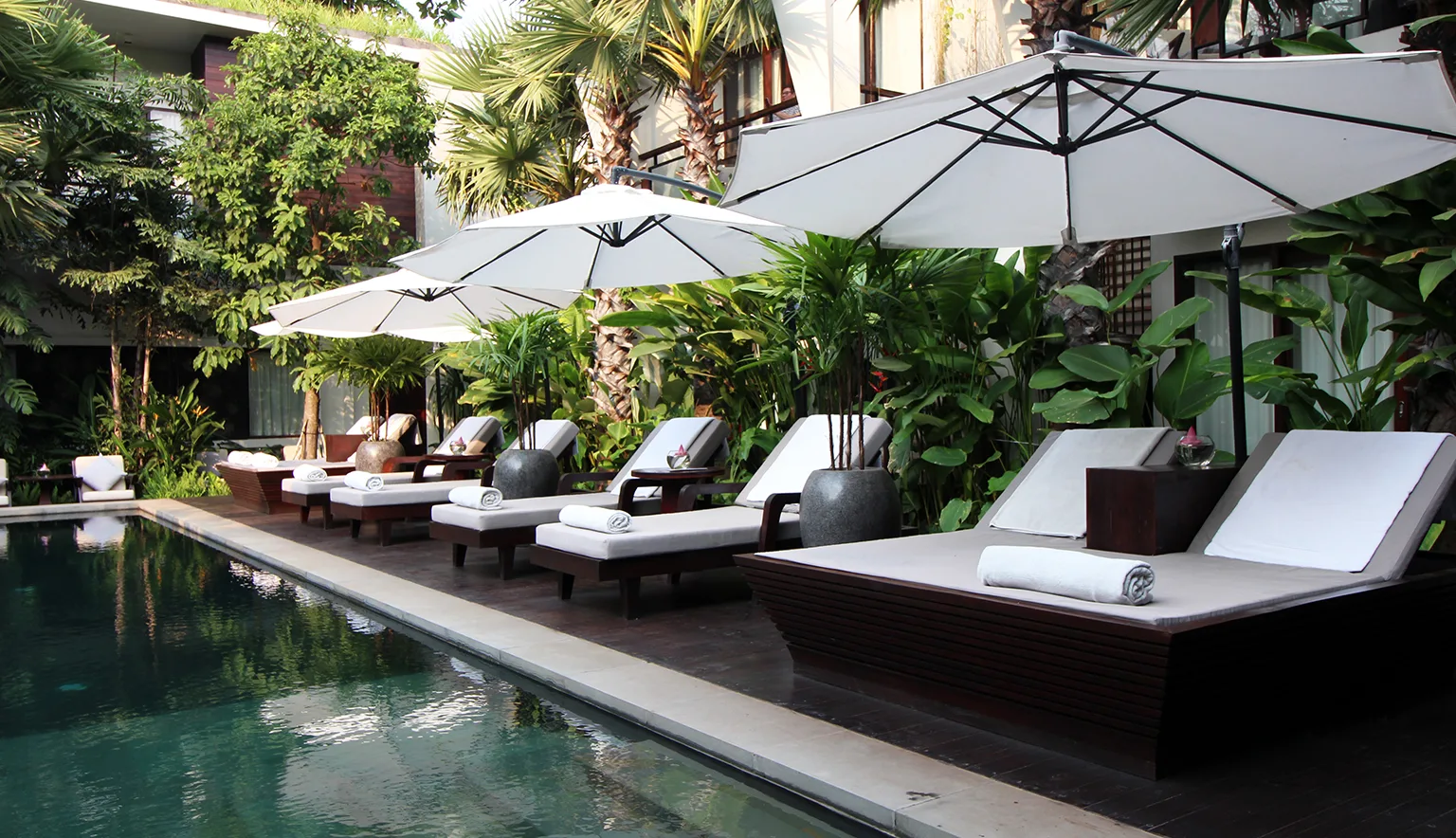
THE HOME OF REGENERATIVE LUXURY
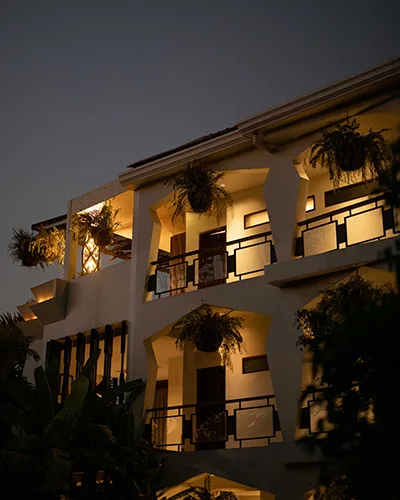
Residing on the banks of the Siem Reap River in Cambodia, Jaya House River Park (Jaya House) is an independently owned hotel founded on the belief that hospitality should actively contribute to the health of its surrounding environment.
“From the beginning, the intention was not simply to minimise harm, but to create measurable, positive outcomes for people, nature, and culture whilst demonstrating that sincere, honest tourism is not only possible, but financially sustainable,” passionately introduces Christian de Boer, Managing Director.
Cambodia’s first single-use plastic-free hotel and consistently ranked as the country’s number one guest accommodation, Jaya House was built with a clear mission: to demonstrate that luxury, when approached thoughtfully, can be regenerative.
“Cambodia’s tourism industry is still developing, which presents a rare opportunity to shape its future responsibly. The boutique accommodation is a working example of how hotels can protect the destination they depend on whilst remaining commercially viable,” he highlights.
With this in mind, Jaya House lives and breathes a regenerative luxury model that is adaptable, scalable, and rooted in local context, making it a benchmark for responsible tourism and environmental leadership.
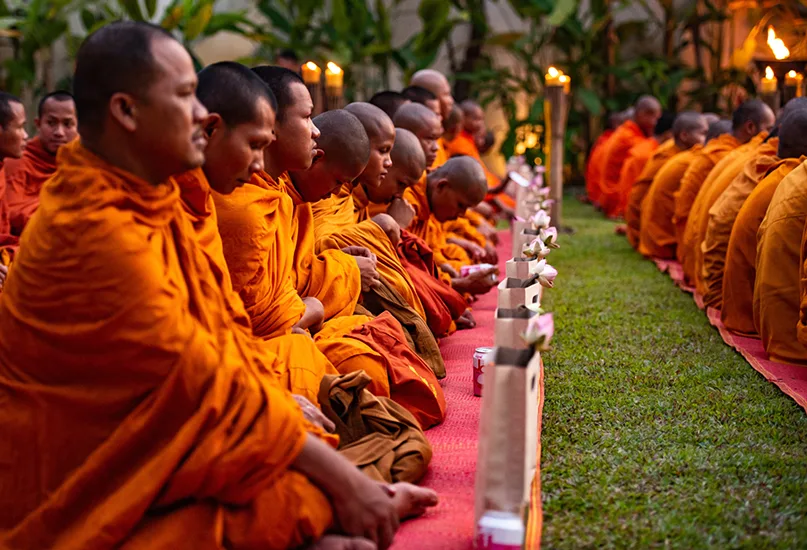
SLOWER, INTENTIONAL, AND LUXURIOUS TRAVEL
Jaya House’s regenerative luxury model is built on the principle of leaving a destination better than it was found.
Rather than focusing on extraction or volume, Jaya House centres around community uplift, environmental recovery, and meaningful guest experiences, which takes a tangible form across the business.
“We eliminated single-use plastic entirely, introduced refill systems that later informed national and international change, and embedded giving directly into the guest journey, with every room supporting local non-government organisations (NGOs) addressing education, nutrition, and post-conflict recovery,” de Boer outlines.
Siem Reap is a Cambodian city shaped by high-volume, short-stay tourism focused narrowly on Angkor Wat, the world’s largest religious complex.
As such, Jaya House’s regenerative luxury model has helped transform the area into a place for slower, more intentional travel.
“Guests are encouraged to stay longer, engage more deeply with the community, and experience Cambodia as a living culture,” de Boer emphasises.
By operating successfully at a smaller scale and remaining commercially strong, Jaya House has shown that low-impact, high-value tourism can offer a credible alternative to mass tourism models.
The strength of the hotel’s regenerative model also lies in its practicality; nothing the hotel does relies on excessive investment or complex technology.
Rather, Jaya House’s decision-making is based around operational choices that any hotel can make regardless of size or budget, including removing plastic, sourcing locally, treating staff fairly, engaging with NGOs, and being transparent about impact.
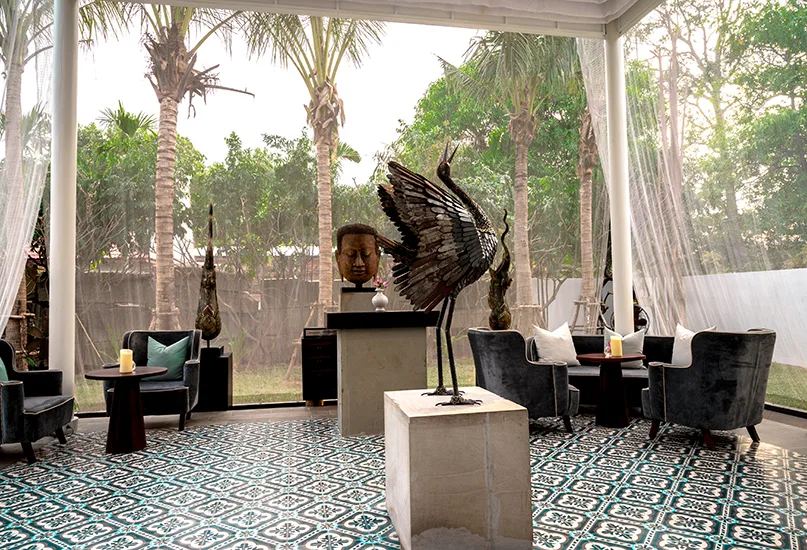
UNIQUE GUEST EXPERIENCE
From the moment they step through the door, travellers feel the importance of Jaya House’s sustainable model.
“Guests experience a hotel that operates entirely without single-use plastic. There are no plastic water bottles, disposable amenities, or unnecessary packaging. Instead, guests refill glass bottles at filtered water stations and quickly realise that nothing about their comfort has been compromised,” de Boer explains.
The hotel additionally invites guests to participate in initiatives that connect them directly with the local community and environment.
For instance, they are encouraged to take part in riverside clean-ups along Siem Reap River, offering them a simple, hands-on way to contribute to the local environment during their stay.
The initiatives are intentionally uncomplicated, allowing visitors to engage meaningfully without feeling burdened or performative.
“These experiences encourage reflection as guests begin to question why plastic-heavy systems are still normalised and common in hospitality and see how small actions can make a real impact,” outlines de Boer.
REFILL NOT LANDFILL
A global campaign achieving meaningful success in reducing single-use plastic, Refill Not Landfill began in 2016 out of daily operational frustration.
“At the time, tourism in Cambodia was consuming plastic water bottles at an enormous scale, yet there was no effective waste infrastructure in place to manage them responsibly. Recycling and offsetting were often presented as solutions, but neither addressed the problem at its source,” de Boer informs us.
In light of this, the decision was made to remove bottled water entirely from Jaya House and replace it with refill systems built around filtered water and reusable bottles.
The immediate impact of this move was visible on the ground and across the riverbanks – areas that once took hours to clean could suddenly be cleared in 20 minutes.
As other hotels, cafés, schools, and tourism businesses faced the same challenges, Refill Not Landfill evolved into a wider campaign focused on prevention rather than clean-up. It provided a practical, reliable alternative to bottled water through free refill stations and reusable aluminium bottles.
Today, the campaign has helped prevent over 500,000 plastic bottles from entering Cambodia’s landfills, waterways, and natural landscapes.
As interest grew beyond the country’s boundaries, the initiative evolved into Refill the World – a global platform that maps and supports refill stations internationally.
“Refill Not Landfill remains our founding philosophy and hospitality-led model, whilst Refill the World provides the infrastructure and visibility needed to operate at scale, showing how a practical, hotel-led solution can grow into a globally relevant system rooted in real hospitality practices,” insights de Boer.
STEP IN THE RIGHT DIRECTION
The evolution of Refill Not Landfill into Refill the World mirrors the broader industry direction and growing recognition that plastic pollution poses a direct threat to the long-term viability of natural ecosystems.
Since the campaign’s launch a decade ago, a vast range of hospitality-led and policy-backed initiatives have emerged.
These include the introduction of refill station networks in hotels and cafés across Bali, coordinated refill schemes supported by municipal waste strategies in cities such as Tokyo and Osaka, and Singapore’s national recycling programme.
“Together, these efforts signal a move from isolated actions to more visible, shared systems,” de Boer states.
Today, Refill the World connects more than 1,000 publicly listed refill stations worldwide, aligning clearly with wider regional and global sustainability goals.
“Cambodia’s experience shows that industry-led action can move quickly and influence wider adoption when solutions are practical, visible, and easy to replicate.”
SUPPORTING SUSTAINABLE PILLARS
Alongside its highly successful Refill Not Landfill campaign and regenerative luxury model, Jaya House’s other sustainability initiatives are rooted in long-term, trusted partnerships rather than one-off gestures.
The hotel encourages regular donations to support numerous organisations including the Green Gecko Project, Landmine Relief Fund, and Small Art School, linking tourism to education, nutrition, and post-conflict recovery.
Jaya House’s Nutritional Book Drive, meanwhile, encourages guests to bring educational books focused on health and nutrition, which are made freely available to local children. To date, this initiative has delivered more than 1,600 books to schools and libraries across Siem Reap.
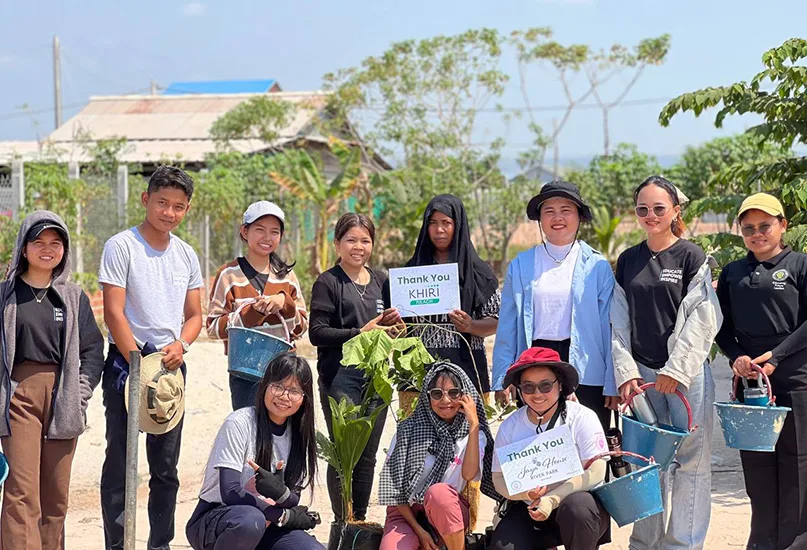
On top of this, the hotel has also planted more than 5,000 native trees across the local area.
“These initiatives are deeply cemented into our operations rather than additional contributions here and there.
“We aim to ensure every guest contributes directly to stronger community resilience and environmental recovery, creating impact that extends well beyond the hotel itself,” shares de Boer.
REFINED AND EFFECTIVE
Jaya House’s focus this year is on refinement over expansion; as sustainability research and guest expectations continue to evolve, so will the hotel’s approach whilst ensuring everything it implements remains practical, effective, and replicable by others in the industry.
Central to this is Jaya House’s desire to show that sincere, honest tourism is a genuine possibility in which the guests themselves play a key role.
“By experiencing honest, regenerative hospitality first-hand, many leave with a higher expectation of how hotels should operate and carry those standards with them to other destinations, helping to raise the bar across the luxury hospitality sector.
“Our aim is to keep improving how we operate whilst continuing to demonstrate that responsible, community-led tourism can thrive commercially and inspire wider change far beyond Cambodia,” de Boer closes.