

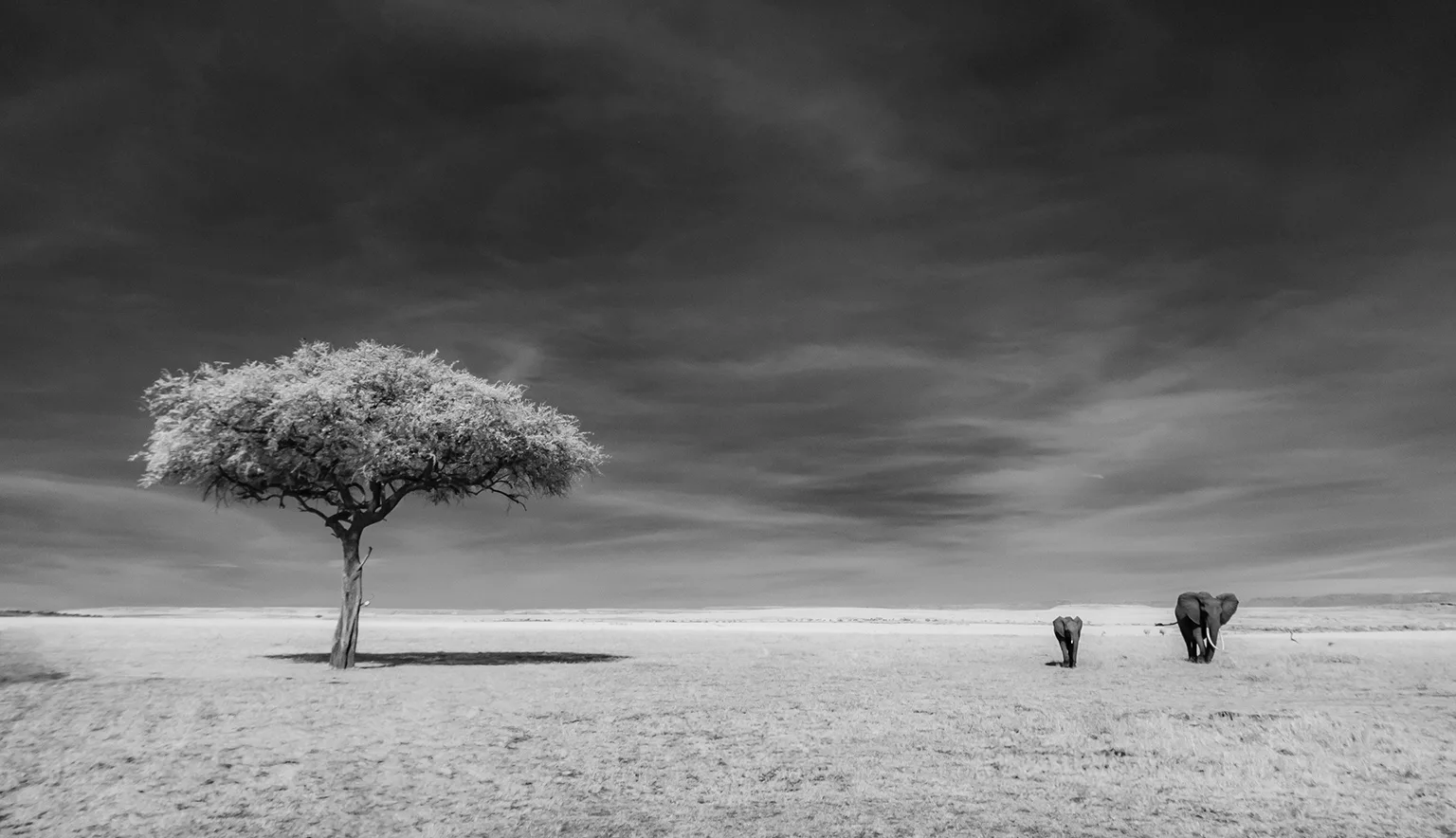
Acclaimed wildlife photographer Shem Compion shares his passion for Africa’s Great Rift Valley, delves into his latest book on the subject, and reflects on the balance of capturing both its breathtaking landscapes and rich human stories, inspiring others to see the world through his lens.
BEHIND THE LENS
Born in the vibrant city of Cape Town, South Africa (SA), Shem Compion has devoted a significant part of his life to the adventurous exploration of Africa.
His journey included a remarkable seven-month odyssey in a rugged Land Rover, traversing diverse landscapes and immersing himself in the wild. Compion has climbed towering volcanoes and crafted specialised wildlife photography hides, deepening his connection to the breathtaking nature of the African continent.
Compion is also a distinguished co-Founder and Managing Director of C4 Photo Safaris, and co-Founder of Photo Mashatu and Nurture Africa Safaris.
Renowned for his evocative imagery, he has won awards in some of the world’s most prestigious photography competitions, showcasing his extraordinary talent.
In 2021, Compion co-produced the highly acclaimed documentary Zero to Zero, which powerfully chronicles the impact of the COVID-19 pandemic in SA and is notable for shining an unfiltered light on frontline healthcare workers and adding a personal perspective.
His exceptional naturalist skills, coupled with a creative photographic approach, have led him to collaborate with the BBC’s esteemed Natural History Unit on the landmark series Planet Earth and to contribute to two spectacular Netflix series, Tales by Light, which capture the wonders of the natural world.
In 2009, Compion published his first book, A Landscape of Insects and Other Invertebrates, and has since expanded his literary portfolio with six additional titles, including If Trees Could Talk and the three-part series Insider’s Guide: Top Wildlife Photography Spots, which takes readers on an exploration of the most remote and breathtaking destinations in southern Africa.
Compion is a sought-after speaker at international photography and nature events, where he passionately shares insights and experiences.
A fellow of the Royal Geographical Society in London, he currently resides in Pretoria, SA, where his love for the planet and photography continue to inspire his work.
Q&A WITH SHEM COMPION
Firstly, what drew you to working in travel photography and Africa’s Great Rift Valley in particular?
Shem Compion (SC): I started taking photos in 2000, quickly combining my naturalist background with the camera to photograph wildlife.
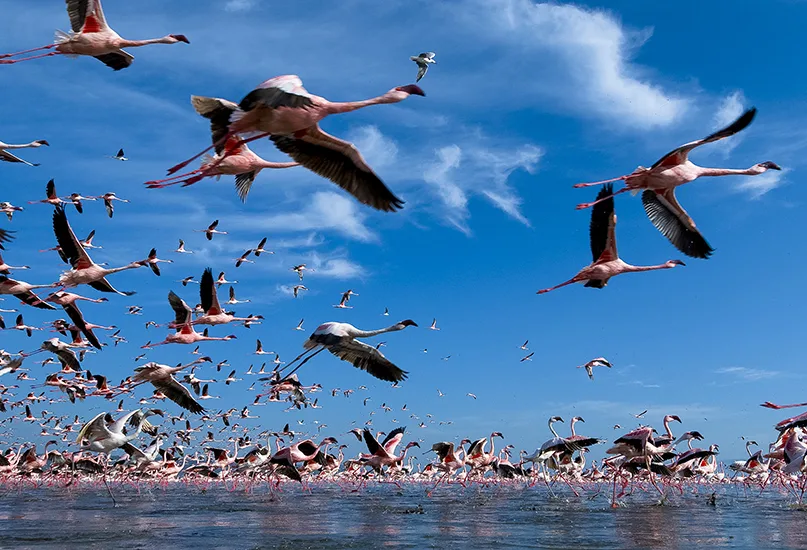
In 2002, on a seven-month self-drive expedition into Africa to ‘live as a photographer’, I had my first real glimpse of the Great Rift Valley as I drove along the escarpment edge near Lake Nakuru in Kenya. Rounding a corner and seeing the lake with thousands of pink flamingos, some 700 metres below, stopped me in my tracks.
The dramatic landscape, the lake, and an incredible pink wildlife phenomenon – all in one scene – captured my imagination right there.
What inspired your recently released book, The Rift: The Scar of Africa, and is there a personal connection to the subject?
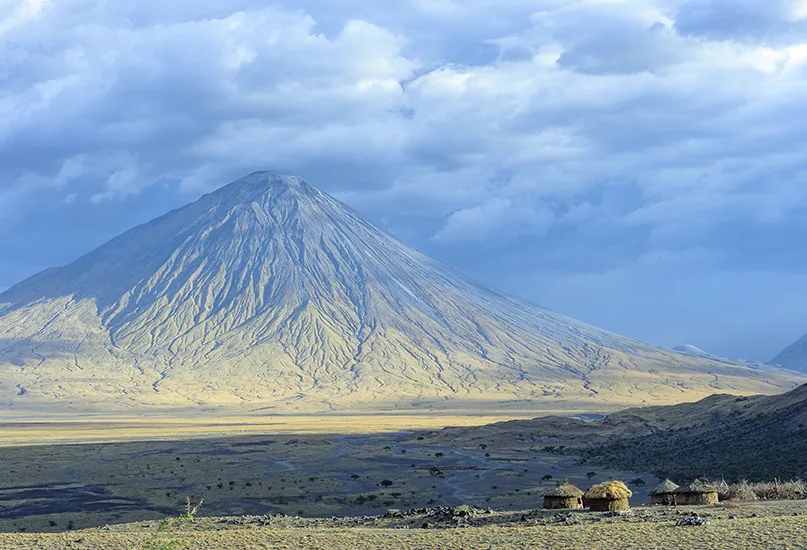
SC: Seeing the Great Rift Valley from the top of the Ol Doinyo Lengai volcano in Tanzania is as dramatic a scene as you can get.
Played out below are the Serengeti plains, Lake Natron filled with flamingos, a large escarpment scar, 10,000-year-old footprints encased in lava, and scattered Maasai villages. It’s a single scene that tells the story of the Rift.
My 20 years of guiding across Africa have embedded in me a love of sharing Africa’s secrets, and here, on top of the volcano, was the best secret to be told. That was very inspiring to me – combining all these intangibles into one tangible book, The Rift: Scar of Africa.
Personally, three generations of my family lived on the rift edge in Elburgon, Kenya, with many stories of their pioneering life within the Great Rift Valley.
It mirrors the same steps many millions of others have taken across the Rift over millennia, and sharing these stories was a strong personal connection for me.
What do you find most exciting about this kind of work?
SC: I find sharing the secrets of the Rift with others so very thrilling. Not only does it house the world’s largest wildlife populations, but it’s also a cultural hotspot, a biodiverse laboratory, and lastly, the crucible of humanity’s origins.
Unearthing and sharing these treasures with guests on safari and via my book is incredibly thrilling to me.
On the flip side, what are the biggest challenges?
SC: The Rift has so many stories, many of them fascinating yet intangible. To bring this together into one coherent project was a tough challenge.
I want stories of the Rift to shine, but I didn’t want to overburden the project with heavy academia. I believe we found the right balance in connecting a person looking at the book to the Rift.
This makes it so much more tangible – something to hold onto and celebrate. Ultimately, the challenge is the most rewarding aspect.
How would you describe your style of photography, and how has it evolved over the years?
SC: Wide-scene images where the subject is a minor player in the narrative of how my style has been described. I like to let the subject ‘breathe’ – giving the rest of the image space to contribute to the story.
I find this lets the viewer settle on an image and read the whole sentence the image is trying to convey, rather than the word.
In 2012, I started visiting remote African cultures, many of which are in the book. This forced me to adopt a different approach to my style – one where I needed to let humanity shine.
Here, I took a step back, encouraged engagement, and captured expressions that are relaxed and engaged. Time was my friend here – allowing for mutual connections makes all the difference in an image.
Additionally, I was attracted to the detail and the intricate design found across many cultures in the Rift. By abstracting the detail and the design, I found I could reveal real beauty.
What has been one of your favourite destinations to capture?
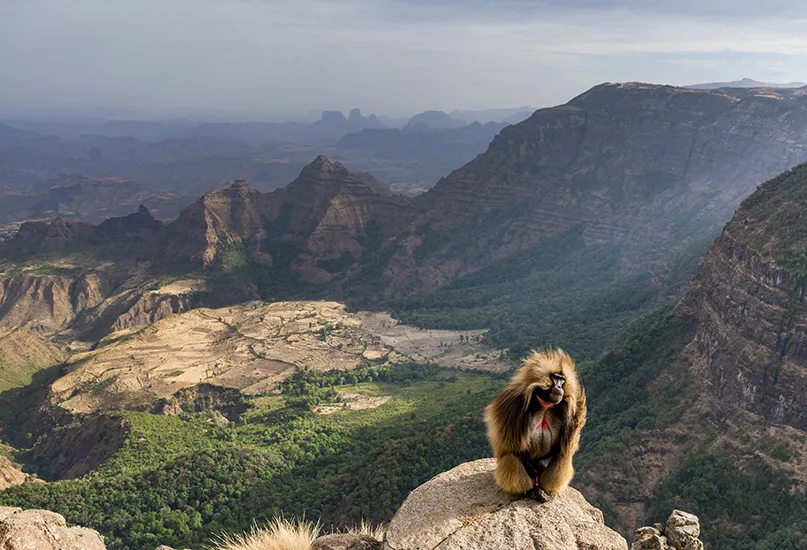
SC: The remote areas of Ethiopia’s Omo Valley are challenging, but also richly rewarding. Using boats on the Omo River makes the expeditions more intrepid, but it also gives you access to truly authentic experiences where the human connection is at its purest and the photography is transcendental.
Have you been involved in any interesting assignments or projects recently that you’d like to highlight?
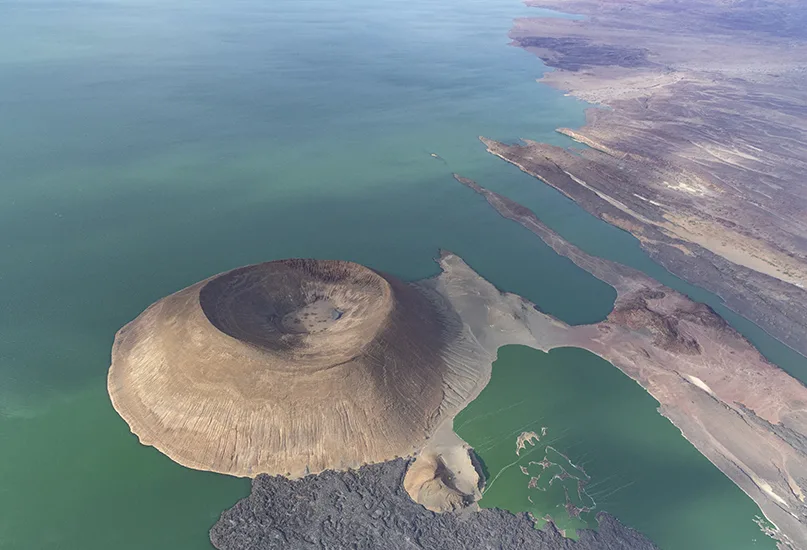
SC: All the most interesting assignments have been the private expeditions I have undertaken. These have led me to the Danakil Depression, remote regions of Northern Kenya, and up to the summit of Ol Doinyo Lengai volcano.
On private trips, many memorable events happen, but hiking up the Volcano Erta Ale in Ethiopia in 2013 was as wild as it got. Upon arriving at the base of the volcano, I was assigned a military escort to hike the 15 kilometres to the crater.
As the only visitor in weeks, I was afforded the royal treatment, with the soldiers walking point, flanks, and sentinel – a sure sign that their engagement wasn’t just for show.
That night, together with my guide, we photographed the volcano from a few meters away. I would take my cues from the guide, whose method of noting danger was twofold – first, watching for any changes in the wind, as the gases are noxious. That method was simple.
Second, he would watch the lava build pressure before popping and spraying everywhere – warning me to retreat. Afterwards, we would inch closer to the edge, and the game would start over.
Being so close to an active volcano, walking on soft, crusty lava cooled by the ground with my private armed military escort was a classic case of living close to the edge, but also demonstrated how brilliantly exciting travel in Africa can be.
Finally, what’s next for the future? Are there any new destinations you’d like to cross off your bucket list?
SC: The more I dug into the Rift project, the more I discovered. That means yes, there are new places I want to travel to – specifically the Omo River Delta as it flows into Lake Turkana in northern Kenya.
The mix of cultures and wildlife in a meandering river delta is fascinating and largely untouched, mainly due to the area’s remote nature and difficult access.