



We highlight some of the ethereal yet often unreal-looking geological phenomena that populate the planet, each embodying the intricate interplay between nature’s artistry and the forces of time.
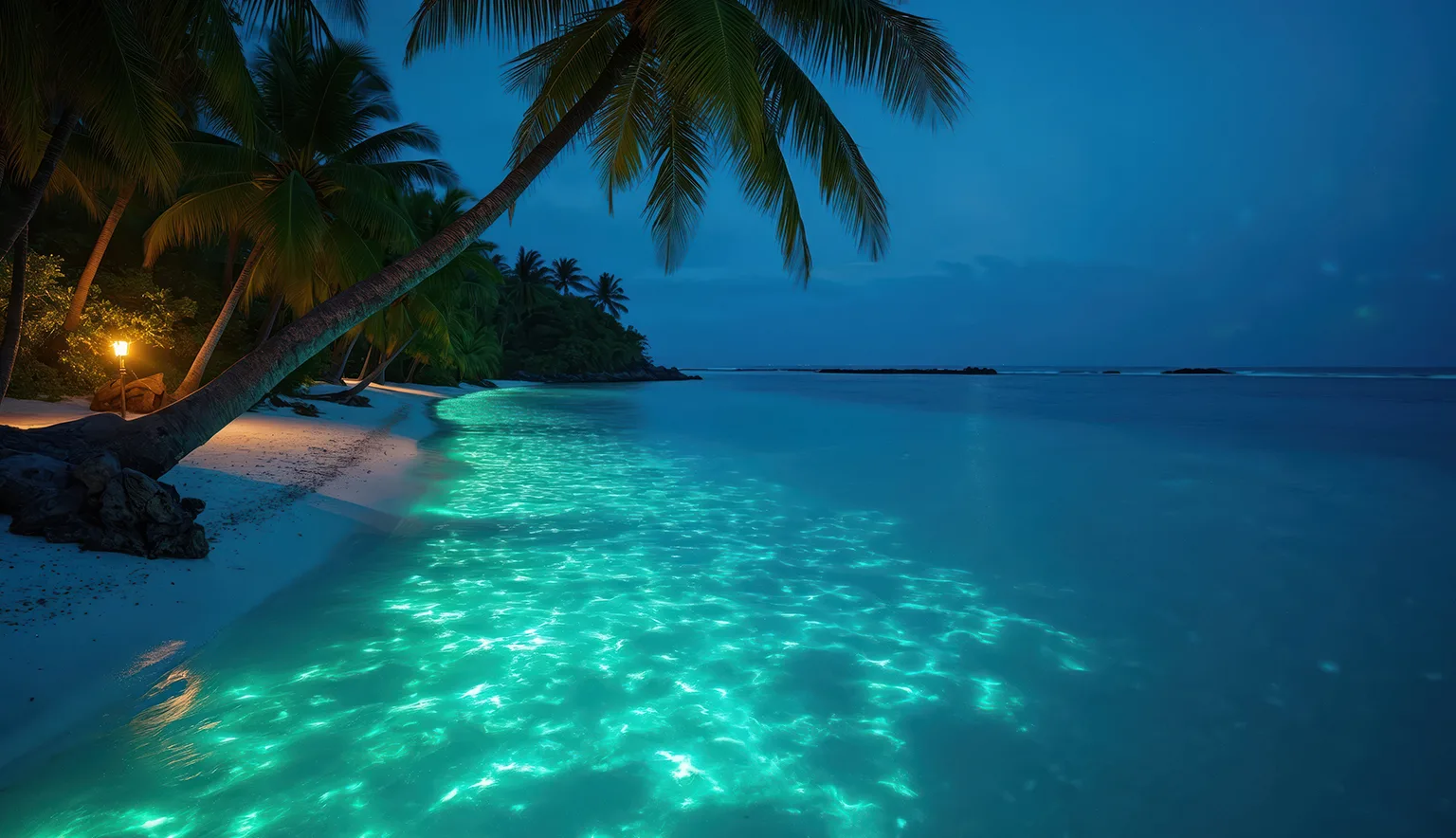
BIOLUMINESCENCE
WHERE: Maldives
Located in the Raa Atoll of the Maldives, Vaadhoo Island is a picturesque gem celebrated for its enthralling landscapes and underwater biodiversity.
This small island captivates visitors with its celestial charm, especially at night when the waters elegantly glow with bioluminescence, creating a surreal scene.
Thanks to tiny phytoplankton dancing beneath the surface, the ocean appears to be painted with stars, offering an alluring display that draws travellers worldwide to witness nature’s radiance.
When stirred by waves or even the gentlest of movements in the water, the microorganisms emit a brilliant blue light, creating a sparkling effect that sways rhythmically in harmony with the fluidity of their surroundings.
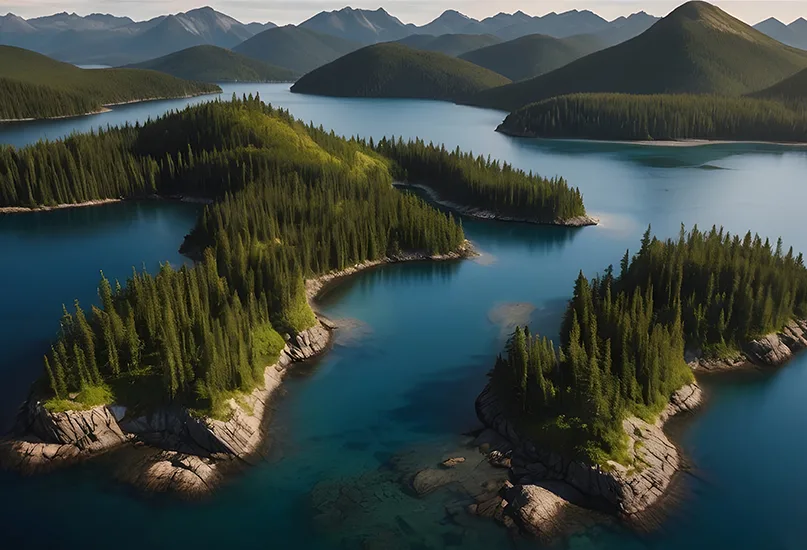
RECURSIVE ISLANDS
WHERE: Canada
Yathkyed Lake, nestled in the remote northern expanses of Canada within Nunavut, is famed for one unusual and fascinating geological feature – its recursive island system.
Creating a stunning masterpiece that echoes the lake’s undulating contours and crafts a hypnotic interaction between land and water, it is shaped by a combination of processes, primarily erosion and sediment deposition.
Often formed in lakes or coastal areas where water levels fluctuate and characterised by their intricately nested landmasses, the recursive islands evoke the beauty of fractals, drawing the eye into their captivating patterns.
This natural spectacle is not merely an aesthetic wonder; it plays a crucial role in enhancing the region’s ecological richness.
They also serve as vital habitats for a diverse array of bird species and other wildlife, all of which flourish in the harsh yet appealing cold climate of the north. The synergy between the unique landscape and its inhabitants creates a delicate balance that deepens the profound allure of Yathkyed Lake.
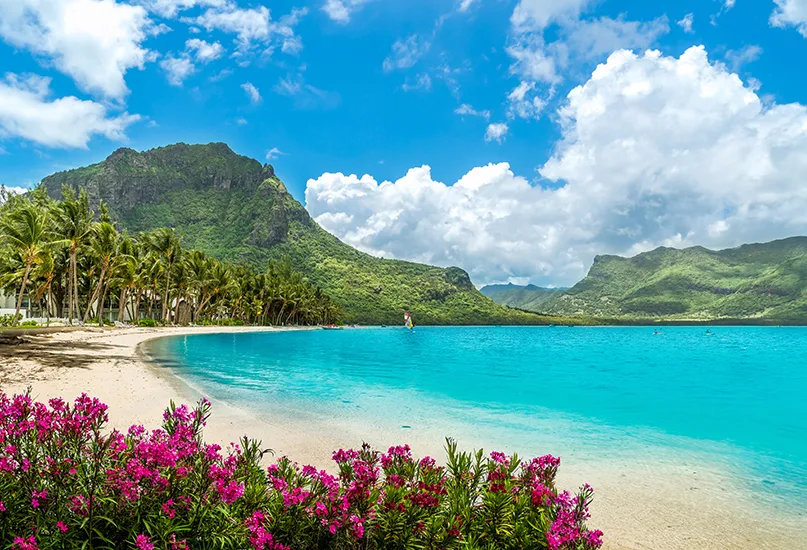
UNDERWATER WATERFALL
WHERE: MAURITIUS
Off the enchanting coast of Le Morne Brabant peninsula in the island nation of Mauritius, a rare optical illusion has created an extraordinary phenomenon in which water seemingly plummets into the deep abyss of the Indian Ocean.
This spectacle results from the flow of varying shades of coloured sand and sediment, transported from the pristine beaches by powerful ocean currents until they reach a geological fault, where they tumble dramatically onto the ocean floor.
As a relatively young island, born from vivid volcanic activity, Mauritius rests on a sprawling submarine plateau, where the seabed descends precipitously to depths exceeding 4,000 metres (m) just offshore.
This natural mirage resembles a colossal hourglass, with the luminous hues of the azure waters uniquely mimicking a bubbling, frothy waterfall.
To fully appreciate the breathtaking beauty of this natural wonder, set against the majestic backdrop of Le Morne Brabant Mountain – a UNESCO World Heritage Site – there is no better way than to embark on a thrilling helicopter ride over the peninsula, offering an unparalleled perspective over this stunning landscape.
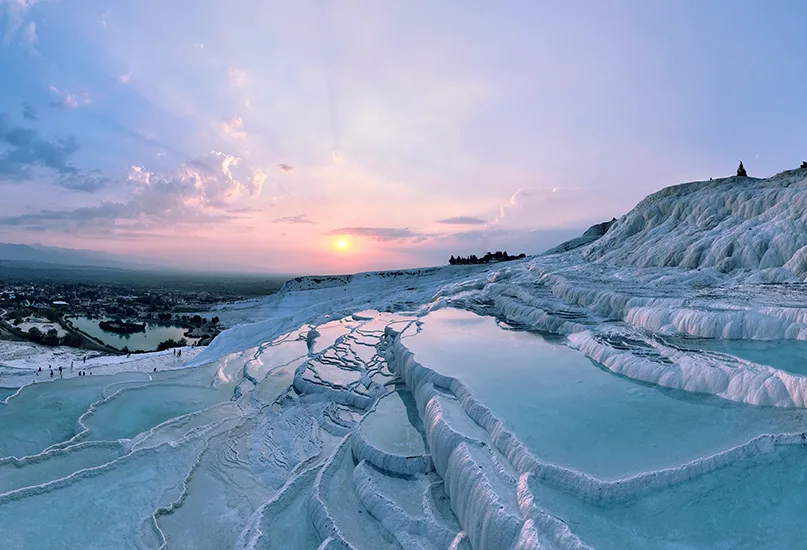
THE COTTON CASTLE
WHERE: Türkiye
A UNESCO World Heritage Site in the heart of Türkiye, Pamukkale – also known as the Cotton Castle – seduces visitors with its layers of pristine white travertine terraces.
These mesmerising formations in Denizli Province are adorned with a series of small, crystal-clear pools brimming with mineral-rich water that flows gracefully over the edges, creating a stunning cascade that glistens in the sunlight.
Meticulously sculpted by nature, these rippling alabaster terraces were formed as mineral-laden waters seeped and deposited their treasures in a shallow, milky-blue step pattern.
The dreamy combination of dazzling white limestone and shimmering aquamarine pools evokes a sense of tranquillity and wonder. At sunset, Pamukkale is a truly visual splendour as the calcium carbonate reflects the extraordinary prism of colours from the sky.
EYE OF THE SAHARA
WHERE: Mauritania
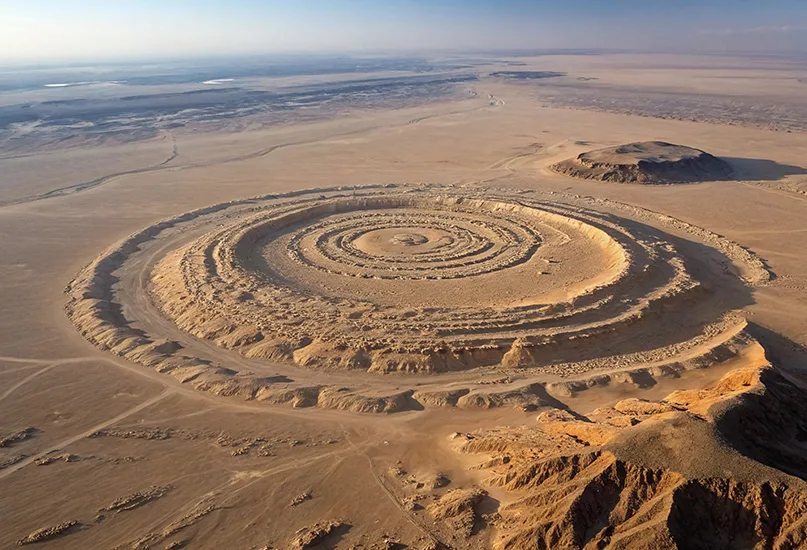
At least 100 million years old and often referred to as the Richat Structure, the Eye of the Sahara is an otherworldly geological marvel that stretches an impressive 30 miles across the arid landscape.
From an aerial view, it resembles a giant bull’s-eye, beguiling the gaze of all who see it. Initially thought to be a result of a meteorite impact, extensive geological research has uncovered a different story.
Instead of a celestial collision, the intricate design is the result of Mother Nature, which has meticulously sculpted these concentric rings over ages of relentless rock erosion and other natural forces, creating a striking reminder of the Earth’s dynamic history.
Bathed in deep shades of crimson and soft pink, the erosion-resistant quartzite sandstones form the striking high ridges, culminating in majestic central rings that rise to 80 m.
Encircling this enchanting eye is the dark expanse of the Adrar Plateau, a formidable sedimentary formation that rises a dramatic 200 m above the surrounding desert sands, part of the Erg Ouarane, an immense sea of golden dunes that stretches endlessly for hundreds of kilometres towards the border of Mali, evoking a sense of vastness and timelessness.
RAINBOW MOUNTAINS
Where: Peru
Towering over the Cusco region of Peru’s Andes Mountains at 16,522 feet above sea level, Vinicunca or Montaña de Siete Colores, which translates as the ‘mountain of seven colours’, boasts an expansive mountain range renowned for its intriguing array of vibrant colours that flow and intertwine like brushstrokes across a canvas.
Commonly known as the Rainbow Mountains, these stunning formations derive their kaleidoscopic hues from a unique mineral composition that has been meticulously layered over millions of years, revealing themselves dramatically through shifting climate patterns that expose hidden layers beneath the surface.
As a result, this spectacular destination stands as one of Peru’s most magnetic treasures, attracting hundreds of eager tourists each year who marvel at its otherworldly beauty.
Adding a cultural dimension to the multilayered Vinicunca – which is considered a sacred site symbolising masculinity and fertility – the Rainbow Mountains are believed to protect local villages from evil spirits.

UYUNI SALT FLAT
WHERE: Bolivia
Radiating out of the breathtaking landscapes of southwest Bolivia, the Salar de Uyuni, or Uyuni Salt Flat, stands as the largest salt pan in the world, sprawling majestically over approximately 11,000 square kilometres.
This vast expanse is characterised by its striking hexagonal patterns, resembling a masterpiece meticulously crafted with a palette knife, each shape a testament to nature’s artistry.
The formation of this extraordinary salt crust is the result of the relentless evaporation of ancient lakes that once filled the region, leaving behind rich layers of brine infused with lithium and salt.
Remarkably, despite its seemingly parched surface, the salt flat undergoes a bewitching transformation during the rainy season each year – a delicate layer of water glistens atop the salt, creating a spellbinding mirror effect that captures the sky’s beauty and offers a stunning tableau that should not go unnoticed.
