


The cosmopolitan metropolis of Milan is dressed to impress as one of the world’s most important and stylish fashion capitals. Today, it is a unique blend of contemporary global lifestyle and authentic yet modern Italian quality of life, as seen in the many different neighbourhoods reshaping the city.
INTRODUCTION
Benvenuti a Milano – where style and elegance await.
The regional capital of Lombardy is also internationally recognised as a fashion capital, alongside Paris, New York, and London, with the biannual Milan Fashion Week showcasing the latest upcoming seasonal outifts, collections, and designs.
Fashionistas flock to the high-end boutiques in Milan’s luxury shopping district, Quadrilatero della Moda, literally meaning ‘fashion square’ – so-called because it is bordered by four prestigious streets, including Via Montenapoleone, which is the most expensive street in the world.
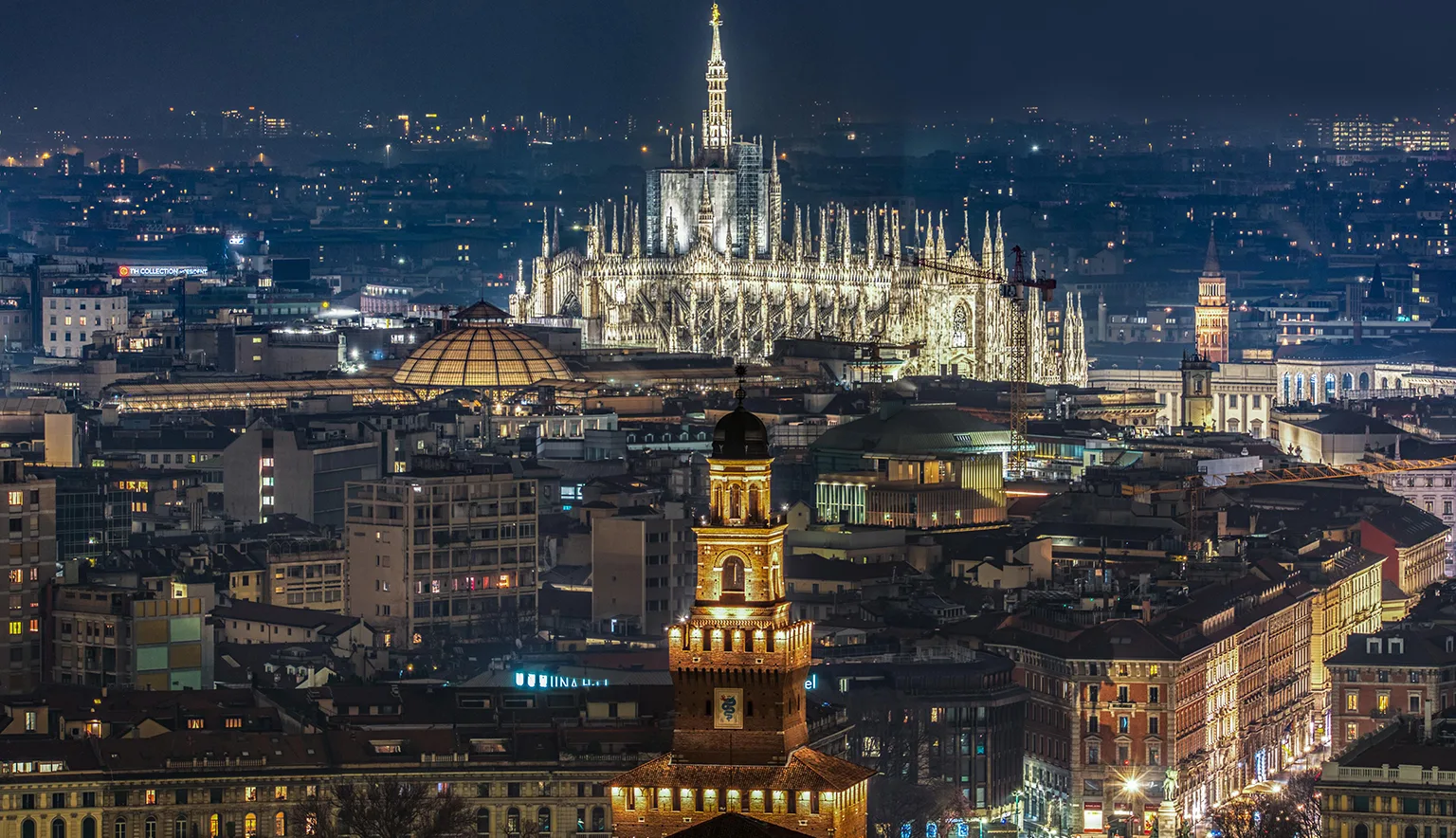
Fashion aside, Milan has a diverse blend of historical and modern architectural styles, including the Gothic Duomo di Milano.
Italy’s largest church is famed for its pink and white marble exterior and golden Madonnina, a statue of the Virgin Mary, that sits atop its highest spire.
Milan is also draped in Renaissance grandeur, as exemplified by Castello Sforzesco, a medieval fortification built in the 15th century by Francesco Sforza, the Duke of Milan.
Castello Sforzesco houses a fine art collection and eight museums, with works by the likes of Michelangelo and Leonardo da Vinci amongst its most celebrated masterpieces.
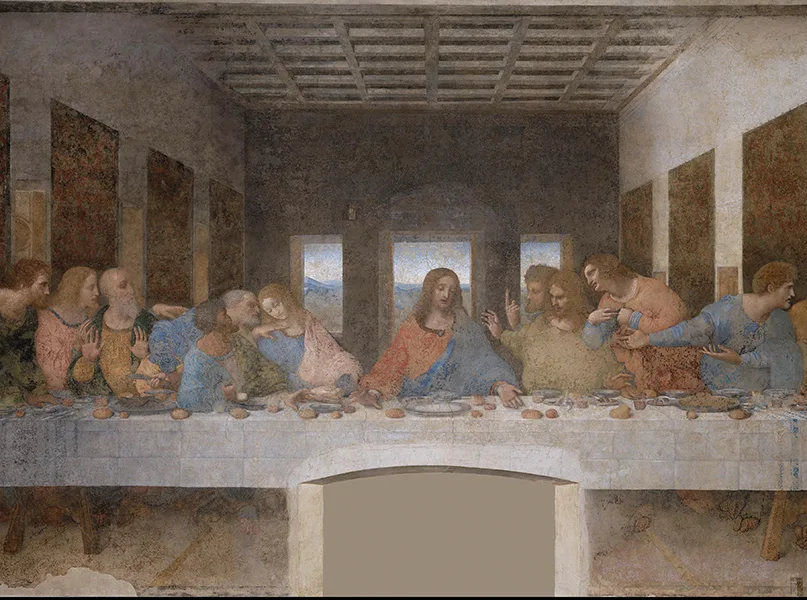
Don’t miss out on da Vinci’s The Last Supper, one of Milan’s most famous attractions, housed in the refectory of the former Dominican convent of Santa Maria delle Grazie.
Q&A WITH MILANO & PARTNERS
As Milan prepares to host the 2026 Olympic and Paralympic Games, we look ahead to the seasonal sporting showpiece with Fiorenza Lipparini, Director General of official destination management organisation (DMO) Milano & Partners, whose YesMilano brand promotes a dynamic, inclusive, and sustainable city.
Firstly, can you introduce us to YesMilano as a brand of the city’s official DMO, Milano & Partners?
Fiorenza Lipparini, Director General (FL): Milano & Partners was born in 2019 as a joint initiative between the Municipality of Milan and the Chamber of Commerce of Milano Monza Brianza Lodi.
It’s a public-private partnership to increase the attractiveness of Milan on three fronts – talent, investment, and tourism.
We use the YesMilano brand to promote a dynamic, inclusive, and sustainable city, built around knowledge and culture, which is capable of welcoming and supporting the curiosity and creativity of younger generations locally and globally.
In our latest campaign, ‘Leonardo and Milano’, in conjunction with the Italian Ministry of Culture, we tried to reach a younger demographic with video clips and manga comics and fix in the mind of the world that Milan is where Leonardo did his most important work and spent two decades at the height of his creative talent.
The campaign also travelled to Expo 2025 in Osaka and got great exposure in many tourism markets in North America and the EU.
As for sustainability, the YesMilano City Pass, launched in 2024, has proved very popular and promotes sustainable tourism by packaging complete access to the metro and tram system and visits to monuments and museums in a single digital pass.
Through YesMilano, how has Milano & Partners promoted Milan internationally?
FL: Milano & Partners and its divisions, like the International Student Desk, Convention Bureau, and FDI Unit, are present at the major DMO and tourism fairs around the world.
Milan’s current positioning is that of a city of knowledge and culture that intends to attract foreign students and international expats whilst continuing to be the European city of sophistication and style.
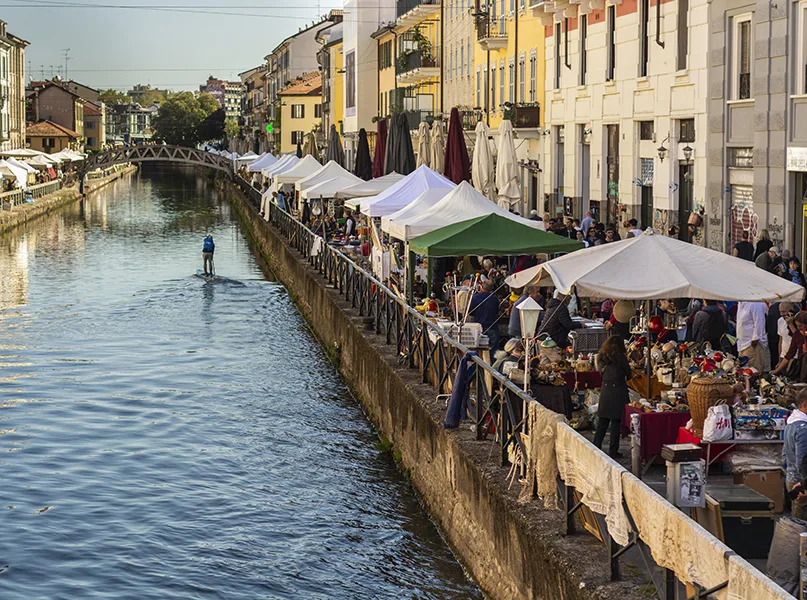
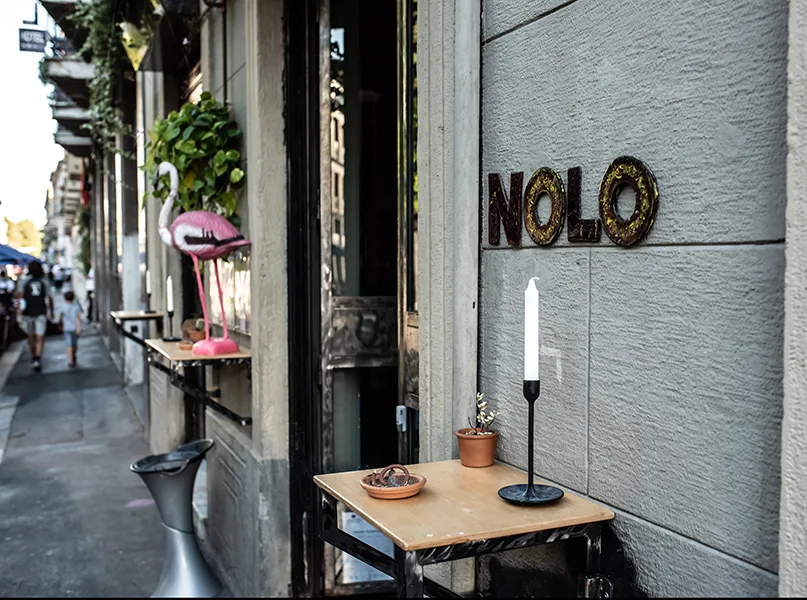
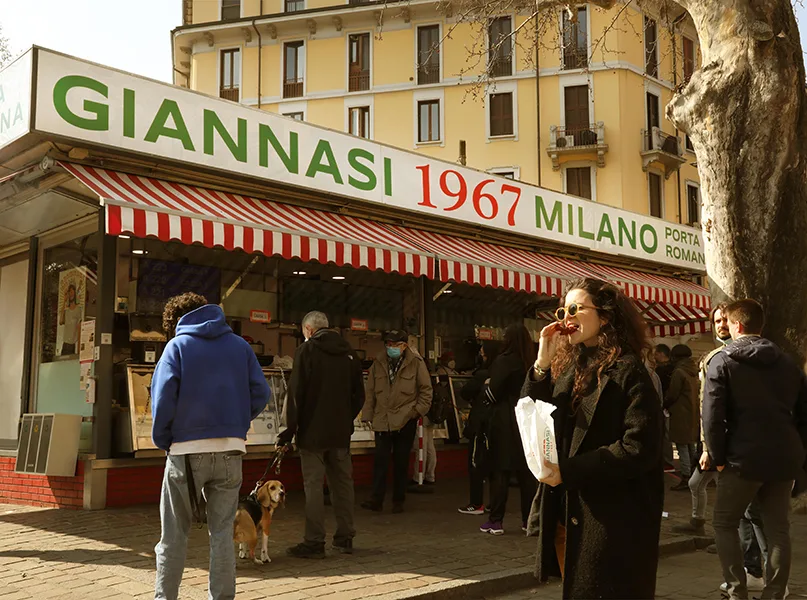
Since the COVID-19 pandemic, it has consistently promoted the various neighbourhoods of Milan, narrating their identities and pointing out their cultural hotspots, particularly in the districts where the young congregate such as Navigli, Isola, NoLo, and Porta Romana, where the Olympic Village is located.
Milan is hosting the 2026 Winter Olympics and Paralympics. What do attendees have to look forward to at Milano Cortina 2026?
FL: First of all, a fabulous opening ceremony at the San Siro Stadium on 6th February.
There will also be beautiful skating at Fiera Milano and fierce hockey with the best teams of the world at the brand-new Arena Milano, designed by David Chipperfield Architects and Arup.
Thirdly, we are organising myriad initiatives across the city with our partners and the Olympic Museum in Lausanne for the Cultural Olympiad.
As a catalyst for development and change, how is Milano Cortina 2026 promoting sustainable tourism?
FL: The upcoming Olympic and Paralympic Games are the first designed with sustainability in mind from day one – from the facilities to the actual unfolding of the sporting competitions surrounded by enraptured spectators.
Everything has been done to minimise carbon emissions and environmental impact and maximise circularity and recycling during Milano Cortina 2026. This also involves the alpine resorts of Bormio and Livigno in Lombardy and ski locations in Trento and Southern Tyrol.
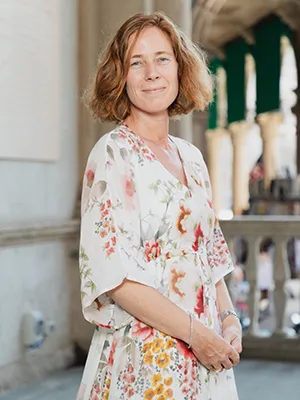
“The upcoming Olympic and Paralympic Games are the first designed with sustainability in mind from day one – from the facilities to the actual unfolding of the sporting competitions surrounded by enraptured spectators”
Fiorenza Lipparini, Director General, Milano & Partners
Why else is 2026 the year to visit Milan?
FL: In April, we’ll have another record-shattering Milano Design Week, bringing thousands of cosmopolitan designers, curious visitors, and students of design to the Salone del Mobile.Milano, as well as the hundreds of events, exhibits, and presentations that are traditionally organised in all the districts of the city.
What other must-see attractions and events in Milan would you recommend to visitors?
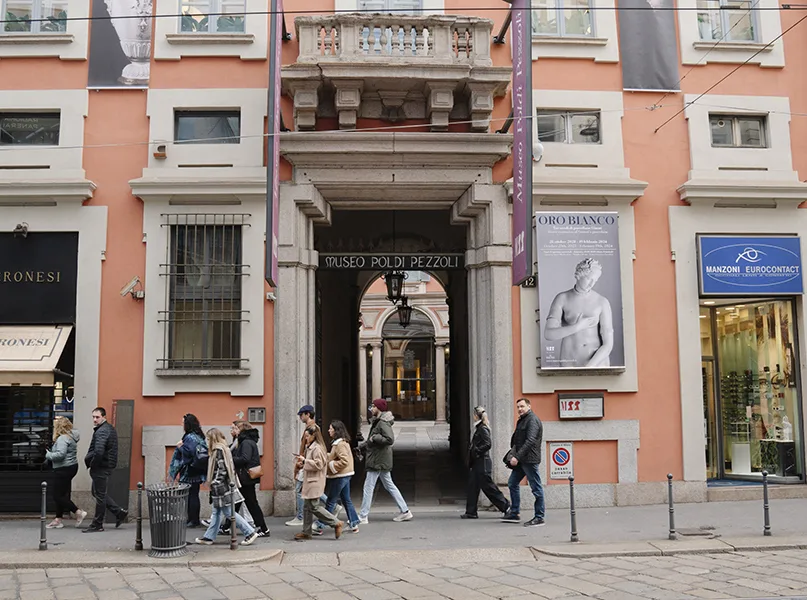
FL: The Grande Brera with Palazzo Citterio for modern art, the Leonardo da Vinci Museum of Science and Technology, and the Poldi Pezzoli Museum for its precious Renaissance artifacts.
I personally dig Fondazione Luigi Rovati with its eclectic mix of Etruscan relics, modern collections, and great cuisine. It’s also near Porta Venezia, the rainbow neighbourhood of Milan.
Finally, are you optimistic about the future of the tourism industry in Milan?
FL: Absolutely, there is room for growth. Even our greatest attraction, Duomo di Milano, remains underappreciated abroad.
Visits to Milan have been increasing steadily and we’ll be reaching 10 million tourists this year. The challenge is to continue to attract lifestyle and luxury tourism whilst remaining meaningful to young students and creatives and speeding ahead in convention tourism and trade fairs.
We want people to stay here beyond the two-night visit, which is currently the standard. Milan is unique in the sense that you can do your working and shopping whilst enjoying a great cultural experience, which often includes a legendary Milanese aperitivo.
OUTLOOK RECOMMENDS
Eat:
FOR VINTAGE HOSPITALITY AND TRADITION…
Experience unforgettable evenings in the intimate atmosphere of L’immagine Bistrot Ristorante, whose cuisine stands out for its carefully selected, premium ingredients.
The restaurant offers a wide variety of appetisers and pasta, meat, and fish dishes, as well as red, rosé, white, and sparkling vinos from the finest Italian wineries.
FOR GOURMET VEGETARIAN DINING…
Joia, the first vegetarian restaurant in Europe to be awarded a Michelin star in 1996, aims to disseminate the principles of healthy, plant-based cuisine.
The restaurant is focused on quality, sustainability, and respect for the environment, with around 80 percent of Joia’s menu being vegan and gluten-free.
Its novel, unique dishes, made using seasonal ingredients, reflect both a spiritual journey and matured awareness.
Do:
FOR THE FIRST PUBLIC REPERTORY THEATRE IN ITALY…
The Piccolo Teatro di Milano (Piccolo) was founded on 14th May 1947 by Giorgio Strehler and Paolo Grassi, together with Nina Vinchi.
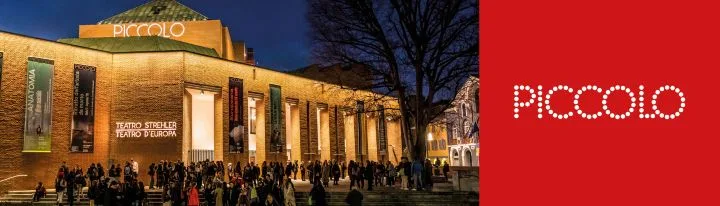
‘An Art Theatre for Everyone’ is the motto and underlying principle that has accompanied the Piccolo ever since it was founded and continues to express its mission – staging quality shows aimed at the most wide-ranging audiences possible.
The Piccolo has produced more than 400 shows – many of which were directed by Strehler – offering major productions of both classic and contemporary writers that have, over time, become part of international theatrical history.
Strehler’s works alone include productions of King Lear and The Tempest (William Shakespeare); Harlequin, The Servant to Two Masters, and Brawling in Chioggia (Carlo Goldoni); The Cherry Orchard (Anton Chekhov); The Threepenny Opera, Life of Galileo, and The Good Person of Szechwan (Bertolt Brecht); and Happy Days (Samuel Beckett).
The Piccolo, which has had ‘Theatre of Europe’ status since 1991, currently runs three impressive auditoriums – Teatro Strehler, Teatro Grassi, and Teatro Studio Melato. The former, its main venue, was inaugurated in January 1998 to the music of Così fan tutte, an opera buffa by Wolfgang Amadeus Mozart and the last production directed by Strehler before his death on Christmas Day in December 1997.
Almost 80 years on from the debut of The Lower Depths by Maxim Gorky, the Piccolo’s memorable curtain-raiser, the journey continues for this essential artistic and cultural institution, which is now an urban and European centre for culture.
FOR A UNIQUE SHOPPING DESTINATION…
Only 15 minutes from downtown Milan, Scalo Milano Outlet & More (Scalo Milano) is a shopping outlet village where you can find design, fashion, food, and a touch of art.
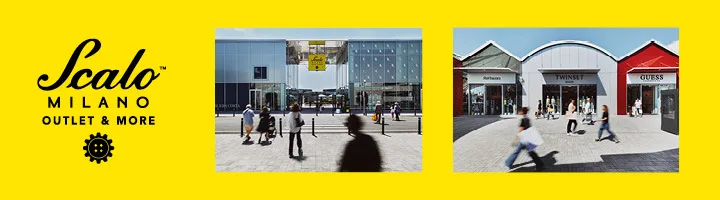
This dynamic and contemporary shopping destination offers some of the world’s most famous Italian and international brands all in one place, from Nike, Adidas, and Calvin Klein to Pandora, Tommy Hilfiger, Trussardi, and many more.
Milan is one of the world’s most important fashion and design capitals, and every style finds its place at Scalo Milano, where you can also find furnishings and decorations for any room – or even just aesthetic and creative inspiration.
For a bite to eat as you pop between the shops, Scalo Milano is equally a destination for food lovers, who can savour a flavoursome selection of restaurants, cafés, coffee shops, and confectionery stores.
The Design District, Fashion Village, and Food Court are all open seven days a week – with the exception of Christmas Day and New Year’s Day – so you’ll be able to shop ‘til you drop no matter when you decide to visit Milan.
Tourists should make the most of the I Love Card, which is free, digital, and comes with incredible benefits, such as 10 percent off in participating stores. For every €30 spent, you can even play for prizes, with gift cards given away every day!
Scalo Milano is easily reachable either by car, bus, train, or a shuttle service that connects it with the centre of Milan.
Sleep:
FOR LUXURY AND DESIGN…
Palazzo Cordusio Gran Meliá
FOR AN AUTHENTIC OLYMPIC RETREAT…
As Milan prepares to host the 2026 Winter Olympic Games, NEMI Hotel Milano offers a different perspective – an intimate and authentic retreat where guests can rediscover the pleasure of slow living and Italian hospitality.
During the Olympic period, NEMI Hotel Milano will be a meeting place for travellers, sports enthusiasts, and lovers of the city, offering an atmosphere of authentic and discreet hospitality – away from the crowds, yet at the heart of the excitement surrounding the event.
2026 WINTER OLYMPICS AND PARALYMPIC GAMES IN FOCUS
Milan is preparing to host the Winter Olympic and Paralympic Games in early 2026, an event that will torchlight the city as one of Europe’s most sought-after destinations.
Fans around the world are invited to experience thrilling live sport and world-renowned Italian hospitality and culture up close.
From 6th – 22nd February, the Winter Olympics will take place in the Lombardy and Veneto regions, where stunning landscapes and iconic venues will set the stage.
The Winter Paralympics follows from 6th – 15th March as athletes compete for a total of 195 medal events – 116 Olympic and 79 Paralympic – across the two events.
The opening ceremony of Milano Cortina 2026, produced by Balich Wonder Studio, will be held at the San Siro, home of AC Milan and Inter Milan. Raising the curtain on a new era for the Winter Olympics and Paralympics, the ceremony will aim to add a new, inclusive dimension to this global celebration.
Not only will there be a spectacular show inside the stadium named after football legend Giuseppe Meazza, but the entire city and the Olympic territories will come alive with satellite events and symbolic moments.
The aim is clear – to take the Olympic spirit beyond the stadium, engaging the public, athletes, and communities in this major showpiece.
World-class facilities will welcome both athletes and spectators whilst combining cutting-edge architecture with sustainable practices, offering a platform to compete at the highest level.
Milano Cortina 2026 is bound to be a memorable event celebrating the energy and legacy of Italian culture whilst crowning the new Winter Olympic and Paralympic champions.
LANDMARK ATTRACTIONS
Duomo di Milano
A story of faith and art spanning over six centuries, Duomo di Milano is a Gothic masterpiece and the largest church in Italy. The cathedral is adorned with 135 spires and over 3,400 statues, whilst its expansive interior holds rich historical and religious significance. It is dedicated to the Nativity of St. Mary and the seat of the Archbishop of Milan.
Galleria Vittorio Emanuele II
Italy’s oldest active shopping arcade was constructed between 1865 and 1877 by renowned architect, Guiseppe Mengoni, and named after the first King of Italy. Galleria Vittorio Emanuele II is home to luxurious boutiques, high-end restaurants, and even the country’s oldest bookstore, Libreria Bocca. It is also beautifully embellished with mosaics – under the central dome, you’ll spot the Savoy coat of arms and various animals that represent Italy’s major cities.
The Last Supper
Painted between 1494 and the beginning of 1498, The Last Supper is considered perhaps most important mural painting in the world. It is located in the refectory of Santa Maria delle Grazie and depicts the dramatic moment immediately after Jesus announces one of the Twelve Apostles will betray him, capturing reactions of shock, anger, and disbelief from the disciples.
GETTING THERE AND AROUND
Italy’s vibrant fashion capital is served by three main airports, with Milano Malpensa Airport (MXP) being the primary international hub and gateway to Milan.
Upon arrival at MXP, the Malpensa Express is the easiest and most convenient way to get from the airport to the city centre. A total of 34 trains run per day from around 5am to 11:30pm, taking just 51 minutes and allowing you to enjoy a comfortable, relaxing journey that avoids the city’s traffic.
Malpensa Express is also an affordable way to get from MXP to the centre of Milan, with tickets costing only €15 and discounts available for children.
Getting around Milan is extremely easy as the main attractions are within walking distance, whilst longer distances can be covered using the city’s extensive public transport network, comprising metro, tram, and bus services.
The city is served by five underground metro routes – M1 Red, M2 Green, M3 Yellow, M4 Blue, and M5 Lilac – and numerous bus and tram lines, meaning there are plenty of options for getting around Milan via public transport.
Public transport is included in the YesMilano City Pass, which also allows you to discover Milan’s most iconic museums and attractions, saving you up to 70 percent on your visit.
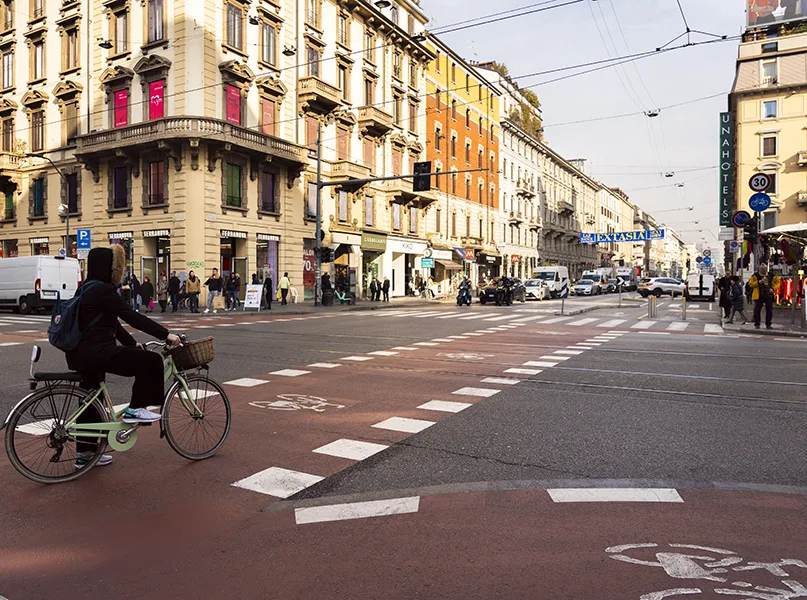
Alternatively, bikes are an eco-friendly and practical means of travelling around Milan, with approximately 144 kilometres of cycle paths and lanes across the city.
Both fixed and free-floating bicycle pick-up and drop-off stations are available, whilst kick scooters and cars can also be shared.
As Milan is an increasingly green city committed to sustainability and environmental quality policies, those travelling by car are required to comply with certain traffic rules and restrictions, however electric cars can benefit from certain concessions.
Licensed taxis in Milan are white and do not usually pick up passengers on the street, but can be requested by phone and online or by going to designated taxi ranks.