


A dynamic, cosmopolitan city boasting a proud Art Nouveau heritage and burgeoning culinary scene, in addition to being the de facto capital of Europe, Brussels is considered the continent’s beating heart where countless cultures collide.
INTRODUCTION
Whilst often referred to as the ‘capital of Europe’ and known as a politically important hub for major EU institutions, Brussels offers so much more when it comes to its history, art, culture, architecture, and cuisine.
The city is a highly diverse metropolis with a significant percentage of its residents being foreign-born, offering visitors a glimpse into numerous cultures and languages and a cityscape that can be considered a collage of architectural prowess.
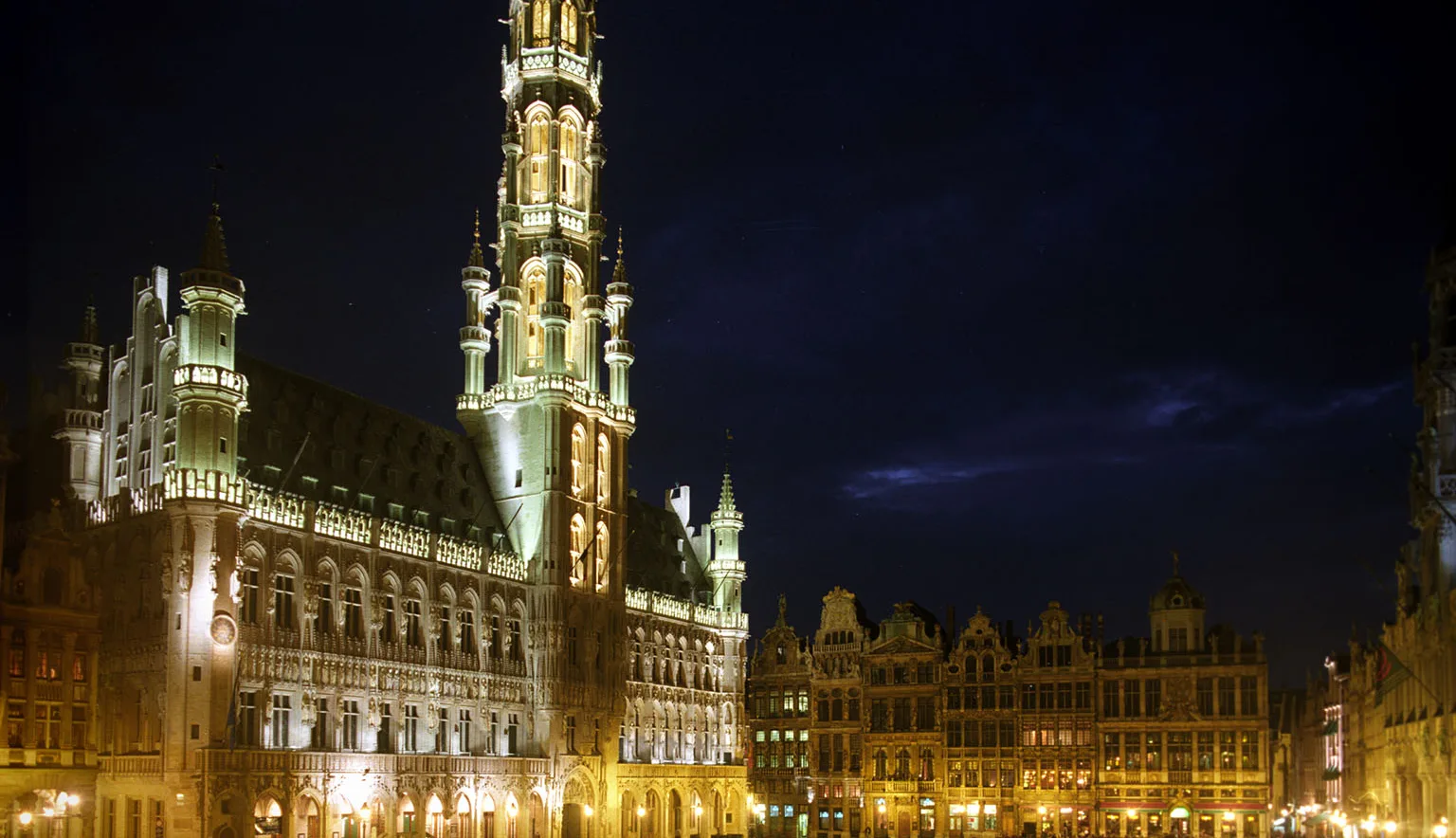
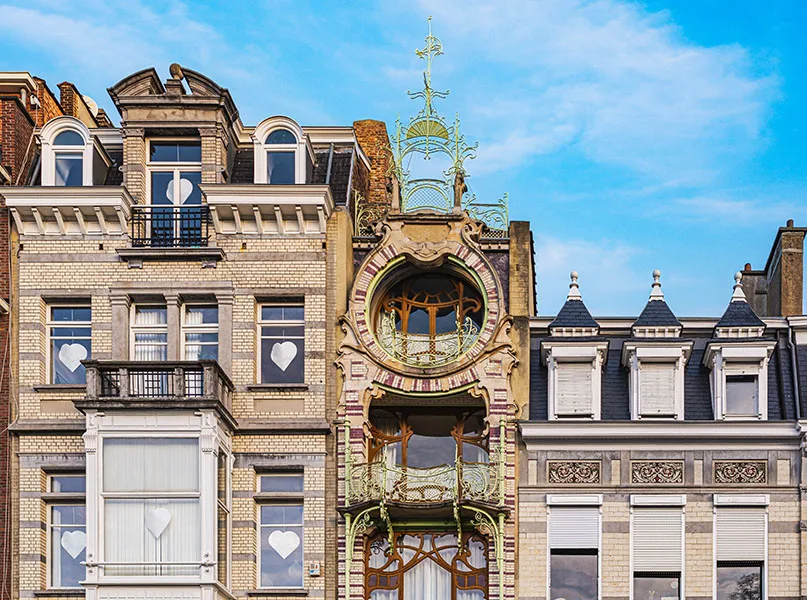
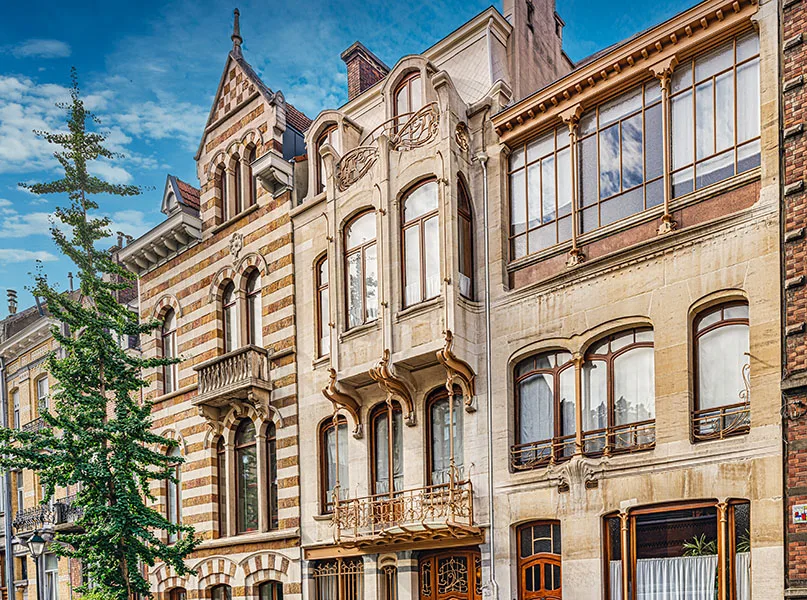
From the opulent Gothic and Baroque guildhalls of the UNESCO World Heritage Site Grand-Place to the stunning Art Nouveau buildings designed by Victor Horta – Hôtel Tassel, Hôtel Solvay, Hôtel van Eetvelde, and Maison and Atelier Horta – which are now collectively recognised by UNESCO, Brussels’ various architecture weaves a rich narrative of the city’s historic evolution.
Brimming with museums and art galleries, the Belgian capital also has a lively cultural scene alongside numerous street art references to world-renowned surrealist artist René Magritte, who famously made the city his home.
The birthplace of many iconic characters including Tintin and the Smurfs, a strong comic book culture is evident in the many murals and street art masterpieces found around the city, with its curated Comic Strip Trail celebrating the various neighbourhoods’ colourful frescoes.
In addition to its historic and cultural allure, Brussels is a paradise for foodies. Having evolved far beyond the Belgian waffles and French fries that the city has long been associated with, Brussels’ innovative culinary scene today has been recognised by the likes of MICHELIN and Gault&Millau.
Despite its urban density, around half of Brussels is composed of parks and gardens, such as Brussels Park and Bois de la Cambre offering plenty of green space for relaxation, whilst the largely pedestrianised city centre is easily walkable.
Brussels also serves as a major transport hub, with high-speed train links making day trips to Paris, London, Amsterdam, Ghent, and Bruges easy.
Q&A WITH visit.brussels
Patrick Bontinck, CEO of visit.brussels, discusses how the destination has made significant strides in developing its digital platforms in recent years and the tourist board’s focus on developing a mutually beneficial approach to promoting the city that balances the needs of both visitors and residents
Firstly, how have you seen Brussels’ tourism offering evolve and overcome challenges in the past decade?
Patrick Bontinck, CEO (PB): For us, one of the biggest initial challenges was to strike a balance between business and leisure tourism. Decades ago, 75 percent of visitors were coming for business and only 25 percent for leisure.
Today, we have increased the number of tourists year-round, and we are happy that we also have a greater balance between leisure and business tourism – it is now nearly half tourism and half business travel, and we are no longer a Monday to Thursday destination.
We are proud to be somewhere people choose to visit at all times of the year, which is important both for us as the tourism board and those operating within the sector who can maintain their staff base year-round instead of recruiting seasonally.
So, for the city, it is beneficial that we have a consistent occupancy of people here throughout the year and don’t solely rely on one period or season.
How do Brussels’ districts, each with their own unique character and charm, present different experiences for visitors to explore?
PB: I think diversity is one of Brussels’ greatest strengths because we have different parts of the city and very distinct districts, which are all part of its history.
It’s not one big city which has increased in terms of size, in fact, it’s lots of parts which have come together to make a whole. This means that each district is different from the other and the atmosphere in each is completely unique.
You can go to the Marolles, which is in the centre and known for its numerous antique shops and historic brasseries, but also to Dansaert and Sainte-Catherine, which are the most creative and vintage neighbourhoods.
Then, we have Flagey and Bailli-Châtelain for gastronomy and lifestyle, or the European Quarter, which has very cosmopolitan energy.
And of course, we have for instance the contemporary art centre Wiels in Forest and interactive museum Train World in Schaerbeek encompassing various different cultural activities, which makes for a variety of things to enjoy in one city.
How does Brussels’ unique cosmopolitan character and its central location in the heart of Europe set it apart from other European destinations?
PB: Brussels is one of the most cosmopolitan cities in Europe with over 180 nationalities, and the second most diverse in the world – something totally unique about us.
Of course, this is due to the fact that we are the political heart of Europe, but we are also gradually becoming a cultural capital.
With a diverse range of nationalities, visitors encounter a different culture from anywhere else in Europe.
For me, Brussels is almost like a cultural yardstick, indicative of what most European cities will be like in the future – mixed and diverse.
As such, I think it’s nice to come visit the city and see what that will be like – even if just for a short break to discover Brussels’ diversity as a place where so many different people have come together.
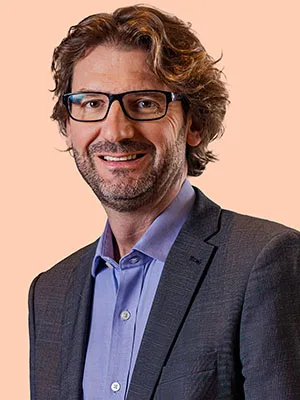
“Brussels is one of the most cosmopolitan cities in Europe with over 180 nationalities, and the second most diverse in the world – something totally unique about us”
Patrick Bontinck, CEO, visit.brussels
What would you say is the city’s most underrated attraction?
PB: The Canal district is really evolving and developing, and we see it becoming a central attraction of the city in the coming years.
Next year, we look forwards to the opening of the KANAL-Centre Pompidou museum for modern and contemporary art – a collaboration with Centre Pompidou in Paris, France – which is hoped will become a famous contemporary art space where you can find different cultural projects.
The museum’s main objective is to curate a space both for visitors and inhabitants where art and culture come together.
Can you walk us through how improved digital strategies have considerably enhanced Brussels’ visibility on digital platforms in recent years?
PB: When it comes to technology, we have made great strides in recent years, having built a fully integrated digital network which includes our website, a customer relationship management (CRM) system, social media presence, and data management capabilities.
This has allowed us to better understand our audience, what their expectations of us are, and how to reach them, meaning our storytelling is both more human and tailored to the needs of those we seek to attract.
We understand that we cannot attract every tourist and visitor and how it’s important for any city to decide which kinds of tourist they want to attract.
In doing so, destinations can create a win-win situation, targeting tourists whose preferences align with our existing DNA. This often leads to visitors returning because they identify with the city and want to rediscover it time and again.
With our new digital system, we can reach those that align with our city’s DNA and serve their needs whilst being sure that what we offer is also convenient, exciting, and relevant to them.
Can you tell us more about your Smart Tourism approach and how it seeks to reconcile the appeal of tourism with improved quality of life for residents?
PB: At visit.brussels, we’ve decided we want to establish a more balanced tourism product that is mutually beneficial for both visitors and residents.
To achieve this, it’s important to note how our city is our product – if we work to preserve our city, we will be able to preserve our long-term visitor numbers.
By doing so, we hope to achieve a perfect balance – an equilibrium, if you will – between tourists and residents, which will result in local people being happy to have tourists in their vicinity, because they understand tourism is both a cultural exchange as well as something which benefits the economy.
Of course, the sector enables us to provide employment opportunities, but we also want to go further and be sure that we have a positive impact in terms of the type of events we bring to the city.
We want the cultural events that take place here to be intrinsically linked to Brussels’ DNA and leave a unique legacy.
Therefore, Smart Tourism involves establishing Brussels as a place for everyone, and tourism as something that is good for both inhabitants and visitors.
We see the initiative as an ongoing, long-term approach – it’s certainly not a one-shot strategy.
As such, we are actively working on what we want to achieve in our city, how we can make it better, and to ensure that Brussels is seen as a place of cultural exchange. Whether our visitors arrive by train or long-haul flight, we want to attract people from all over the globe.
To say we’re not going to promote Brussels internationally or outside of Europe is dangerous – it remains crucially important that we reach a diverse audience. Ultimately, the responsibility of tourism is to help people understand one another.
And that’s what we’re doing in Brussels – helping people to understand each other and attracting people from all over the world to have those exchanges in a careful and respectful way.
How has the European Regional Development Fund (ERDF) enhanced your tourism model?
PB: The ERDF funding is very important because it gives us a boost in terms of what we can offer both our visitors and residents, especially regarding access to culture.
For example, if we want to promote a district of the city that’s not so well known, people are going need to be able to access it – both literally and figuratively.
If visitors can access a promotion online, for instance, they must also be able to access it easily via our public transport networks.
This is what we’re seeking to develop with assistance from the ERDF funding – granting easier access to lesser-known attractions in Brussels and offering a holistic tourist experience.
“We must continue to invest in quality innovation and tourism – every investment we make is intended to benefit both inhabitants and visitors”
Patrick Bontinck, CEO, visit.brussels
How has your vision for a sustainable and responsible tourism model evolved over the years, and how has optimising visitor routes, encouraging the discovery of less-frequented neighbourhoods, and establishing a low emission zone (LEZ) contributed?
PB: Of course, every city speaks a lot about sustainability, but we really try to implement it in a concentrated way.
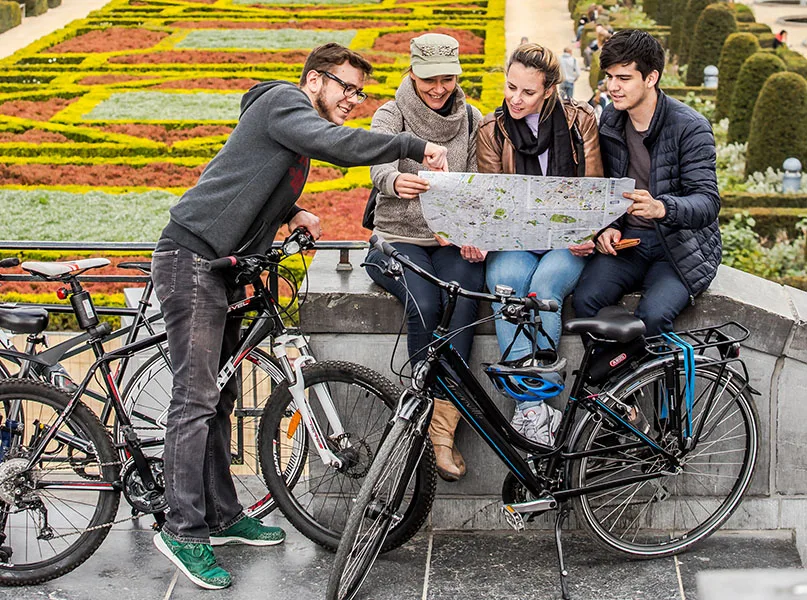
The LEZ is a way to reduce pollution in the city centre and encourage green mobility. It also grants easier access to public transport for tourists because you can buy a Brussels Card to give you unlimited access, whilst those that don’t choose this option can still access the transport network through a contactless bank card payment system.
Also, because we don’t have a big coach station in the city centre, we like to remind tourists that it’s often easier to secure accommodation outside the city and take advantage of the wider public transport network to access Brussels.
As the number of drivers is diminishing, parking spaces in the city centre are too. All this goes to show that when we try to develop small things, we can also make a positive difference in the long-term in terms of sustainability.
Finally, are you optimistic about the future of the tourism industry in Brussels?
PB: Yes, I’m optimistic because I think Brussels, like many cities, has historically proven its ability in crucial moments such as terror attacks, but also in terms of its recent recovery from the COVID-19 pandemic.
We have seen that we can recover from a plethora of circumstances, and that’s what’s important – resilience is crucial for the future as it means however we are tested, we will recover.
This is why we must continue to invest in quality innovation and tourism – every investment we make is intended to benefit both inhabitants and visitors.
Speaking of this balance, the win-win situation we’ve curated is an opportunity for everyone to discover Brussels’ culture, its artisanal goods, local markets, and more – things which are really important for any European city.
That’s another reason I’m optimistic – nowadays, tourism accounts for 10 percent of GDP across Europe, something we wish to sustain on the continent and emulate in Brussels.
This will be achieved by continual investment and effort, because we want to sustain and grow tourism whilst giving a better life to our inhabitants – that’s the full balance we are seeking to achieve.
OUTLOOK RECOMMENDS
Eat:
FOR REFINED, WELL-CRAFTED DINING…
Situated in the vibrant, centrally located Vismarkt neighbourhood, Barge is the irrefutable home of responsible gastronomy in Brussels, offering a creative seasonal tasting menu that changes weekly based on available ingredients and the chef’s inspiration.
With sustainability at its core, the restaurant promotes a farm-to-fork approach which includes careful sourcing and partnering with local, long-trusted producers.
This deep-rooted environmental commitment is reflected in every aspect of Barge’s menu – from its aperitifs, wines, and non-alcoholic pairings, which are perfectly in tune with the establishment’s dishes focusing on high-quality ingredients and beautifully in step with nature.
Each plate is treated unpretentiously, shaped with craft, focus, and precision, reflecting chef Grégoire Gillard’s ongoing dedication to spotlighting Brussels’ micro-seasons.
The restaurant has been recognised with a MICHELIN star and a Gault&Millau rating of 15.5 out of 20, echoing its commitment to culinary excellence.
Do:
FOR FULL STEAM AHEAD…
mbark on an unforgettable journey through the heart of Belgian railway history at Train World!
Housed in the magnificent, fully restored Schaerbeek station, this isn’t a typical museum – it’s an immersive experience designed to captivate visitors of all ages.
Walk amongst dozens of iconic, full-sized locomotives and historic carriages, and even step inside some to explore their vintage interiors.
Marvel at the futuristic National Railway Company of Belgium (NMBS/SNCB) Type 12 steam engine, a former world speed record holder, or gaze upon the opulent royal train cars. The interactive exhibits, including a high-speed train simulator, also bring the history of rail travel to life.
Whether you’re a dedicated rail enthusiast or seeking a unique, family-friendly day out, Train World promises a fascinating and educational experience.
Sleep:
FOR UNPARALLELED LUXURY AND WELL-BEING…
Radisson Collection The National Hotel, Brussels offers a blend of contemporary luxury and natural serenity situated on a championship golf course.
Featuring exquisite dining, rooms with scenic views, and access to David Lloyd Club’s wellness facilities, the hotel is not to be missed.
Indulge in contemporary elegance and comfort at this spectacular retreat.
FOR A HOME AT THE HEART OF THE ACTION…
Radisson Collection Hotel, Grand Place Brussels reflects the cosmopolitan spirit of the city due to its strategic location just a stone’s throw from the Grand-Place, shopping areas, and Brussels Central railway station.
Distinguished by its 5-star status, plethora of modern amenities, and authentic, high-end feel, the hotel seamlessly blends the best of international living with a powerful sense of place.
Housed in a postmodernist masterpiece designed in 1989 and featuring a spectacular glass-crowned, seven-story atrium, this is an unmissable stay in Brussel’s centre.

BRUSSELS’ CULINARY SCENE IN FOCUS
Historically, Brussels has been known to offer a blend of hearty Flemish and French cuisines and is recognised for its iconic staples such as waffles, chocolate, beer, and frites, alongside typical Belgian dishes such as moules frites, carbonnade flamandes, and stoemp.
Today, however, away from the frietkots and waffle houses on well-trodden paths, the city’s culinary scene is undergoing a quiet evolution, with a growing mix of diverse brasseries, international restaurants, and modern food trends to rival even the most innovative haute cuisine.
Plant-based menus are on the rise, with top chefs embracing the movement by placing greater emphasis on vegetables and herbs – both for their taste and sustainable value.

Five of the city’s restaurants have been recognised by the prestigious MICHELIN Guide for their innovative use of plant-based ingredients and deep respect for each component that appears on the plate.
Humus x Hortense, for example, redefines plant-based fine dining with a decadent tasting menu that changes according to the year’s 24 micro-seasons. Championing a zero-waste, roots-to-leaves cooking approach, the MICHELIN Guide recognises chef Nicolas Decloedt’s dedication to vegetables and herbs, with many of the restaurant’s ingredients often sourced from Le Monde des Mille Couleurs – a regenerative wild farm growing plants and edible wildflowers.
Brussels’ burgeoning culinary talent has also been recognised by Gault&Millau – the renowned French restaurant guide – which recently named David-Alexandre Bruno as Young Chef of the Year 2026.
Emerging as one of the most promising faces on the city’s restaurant scene going into next year, the 36-year-old is currently employed at Quartz, where he has transformed the former butcher shop into a culinary gem with first-rate cuisine exuding French finesse and enhanced with locally sourced ingredients.
Belgium more broadly is also globally renowned for its high-quality chocolate, a tradition dating back to the 19th century, and Brussels is where the praline was invented. Numerous Belgian chocolatiers – such as Neuhaus and Wittamer – maintain strict quality standards at their city stores, ensuring a minimum of 35 percent pure cocoa in their recipes.
LANDMARK ATTRACTIONS
Grand-Place
Widely considered one of Europe’s most beautiful city squares, the Grand-Place is a UNESCO World Heritage Site and the heart of historic Brussels. Also known as Grote Markt, it is surrounded by opulent, ornate Baroque and Gothic guildhalls and the stunning City of Brussels Town Hall (Hôtel de Ville), most of which were built in the late 17th century, and remain the workplace of the mayor and their aldermen today.
Magritte Museum
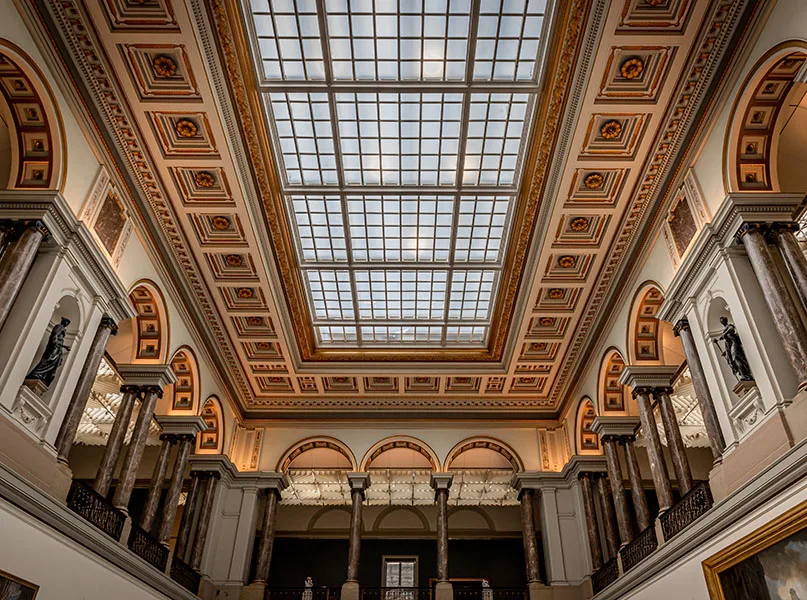
Housing the world’s largest collection of the renowned surrealist artist René Magritte and located in the heart of Brussels, the Magritte Museum features paintings, gouaches, drawings, sculptures, and painted objects alongside the most important works from the artist’s short-lived ‘vache’ period. Part of the Royal Museums of Fine Arts of Belgium, the selection of works is constantly expanding and changing which sees art connoisseurs and tourists alike return time and again.
Bozar
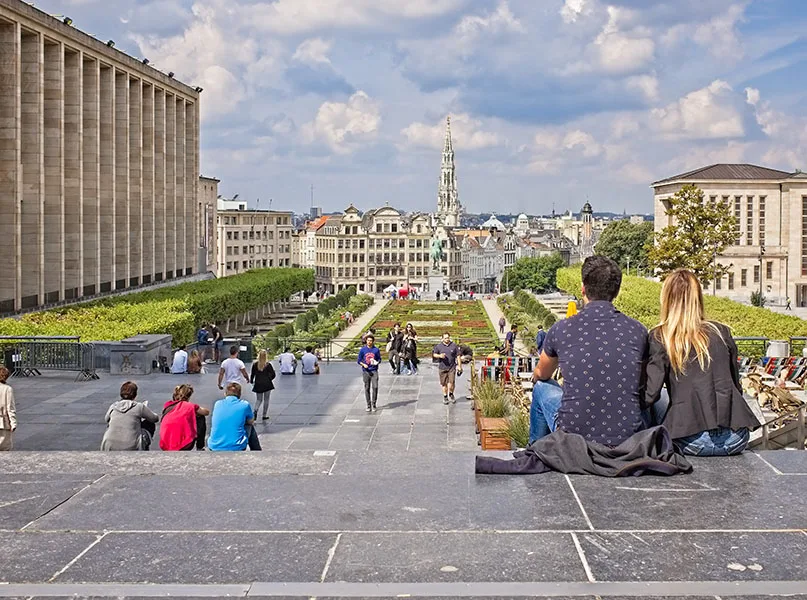
Considered the city’s most visited cultural destination, Bozar is the home of concerts, exhibitions, film screenings, contemporary dance, and theatre performances in Brussels, where creativity and artistry come alive. Prioritising originality and innovation, Bozar aims to be a vibrant space for the living arts, housed within Victor Horta’s architectural masterpiece in the middle of the Mont des Arts, where the upper part of Brussels meets the lower.
GETTING THERE AND AROUND
Getting to Brussels from the UK is quick and convenient, with several transport options available. For example, the Eurostar connects St. Pancras station in London directly to Brussels-Midi station in under two hours, offering a seamless city-centre to city-centre experience with generous luggage allowances.
Additionally, flying from London to Brussels Airport (BRU) offers a rapid alternative, with a flight time of around 75 minutes – but be sure to factor in the additional time required for airport security into your journey.
High-speed rail services connect Brussels with many other popular European cities in under two hours, such as Paris, Amsterdam, Cologne, and Bruges to name a few.
Budget travellers can opt for a bus journey from various locations across Europe – though this takes significantly longer – whilst arriving via car and a ferry provides flexibility but comes with potential challenges of traffic and parking costs.
Once in the city, getting around Brussels is very straightforward thanks to its well-connected public transport system managed by Société des Transports Intercommunaux de Bruxelles (STIB).
The network comprises an efficient metro, extensive tram lines, and conveniently timed buses, all operating from the early morning until around midnight.
On weekends, the Noctis night bus service is available, with tickets easily purchased from station machines or by using a contactless bank card at turnstiles.
For exploring the central areas, walking is a great way to see attractions like the Grand-Place, whilst cycling is another option that enables visitors to cover more ground, with many reasonably priced bike rental stores throughout the city.