



Historically, Brussels has been known to offer a blend of hearty Flemish and French cuisines and is recognised for its iconic staples such as waffles, chocolate, beer, and frites, alongside typical Belgian dishes such as moules frites, carbonnade flamandes, and stoemp.
Today, however, away from the frietkots and waffle houses on well-trodden paths, the city’s culinary scene is undergoing a quiet evolution, with a growing mix of diverse brasseries, international restaurants, and modern food trends to rival even the most innovative haute cuisine.
Plant-based menus are on the rise, with top chefs embracing the movement by placing greater emphasis on vegetables and herbs – both for their taste and sustainable value.
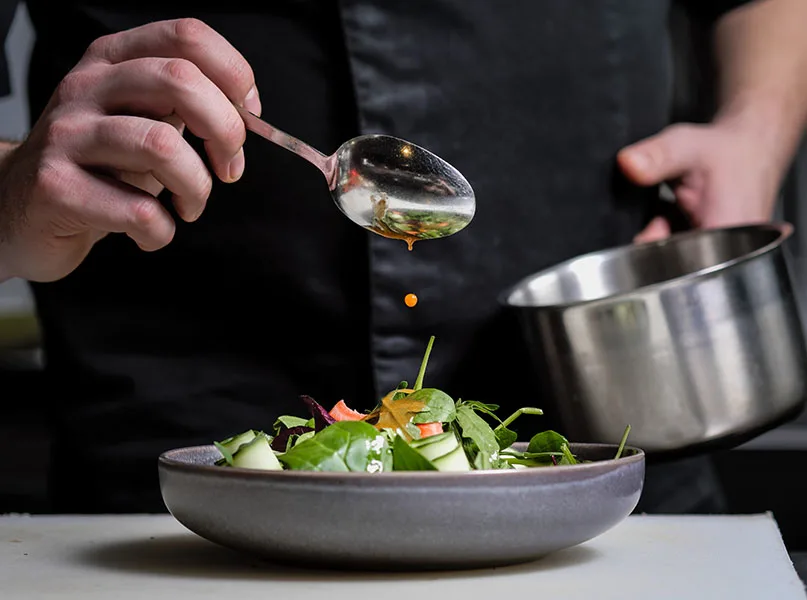
Five of the city’s restaurants have been recognised by the prestigious MICHELIN Guide for their innovative use of plant-based ingredients and deep respect for each component that appears on the plate.
Humus x Hortense, for example, redefines plant-based fine dining with a decadent tasting menu that changes according to the year’s 24 micro-seasons. Championing a zero-waste, roots-to-leaves cooking approach, the MICHELIN Guide recognises chef Nicolas Decloedt’s dedication to vegetables and herbs, with many of the restaurant’s ingredients often sourced from Le Monde des Mille Couleurs – a regenerative wild farm growing plants and edible wildflowers.
Brussels’ burgeoning culinary talent has also been recognised by Gault&Millau – the renowned French restaurant guide – which recently named David-Alexandre Bruno as Young Chef of the Year 2026.
Emerging as one of the most promising faces on the city’s restaurant scene going into next year, the 36-year-old is currently employed at Quartz, where he has transformed the former butcher shop into a culinary gem with first-rate cuisine exuding French finesse and enhanced with locally sourced ingredients.
Belgium more broadly is also globally renowned for its high-quality chocolate, a tradition dating back to the 19th century, and Brussels is where the praline was invented. Numerous Belgian chocolatiers – such as Neuhaus and Wittamer – maintain strict quality standards at their city stores, ensuring a minimum of 35 percent pure cocoa in their recipes.