

As South Australia’s coastal capital continues to see growth and evolution, Adelaide Economic Development Agency plays a crucial role in shaping the future. Gemma Nelson, Advisor, Tourism Industry Development, discusses activating the city, attracting investment, and driving measurable economic outcomes.
Q&A WITH ADELAIDE ECONOMIC DEVELOPMENT AGENCY
Firstly, how have you seen Adelaide’s tourism offering evolve in recent years? What challenges or opportunities have you encountered?
Gemma Nelson, Advisor, Tourism Industry Development (GN): When I arrived in Adelaide in 2010, I didn’t know what to expect but fell in love with it immediately and made it home!
It’s a small city that has everything you need, is surrounded by nature, and has the most warm and welcoming people. Since then, I think Adelaide’s tourism offering has evolved a lot.
We’ve shifted from being ‘Australia’s best-kept secret’ to confidently owning our identity as a vibrant, experience-rich destination.
The central business district (CBD) is ‘growing up’, with small laneway bars and many restaurants serving the most amazing food, new international hotels, arts and cultural experiences, and incredible year-round events.
We are globally recognised as Australia’s only UNESCO City of Music and one of only four National Park Cities in the world, which means sustainability, creativity, and culture are embedded into Adelaide’s DNA.
Our opportunity now is depth – more experiences that encourage longer stays and dispersal throughout the city. Adelaide is in a growth phase, and the challenge – which I see as a privilege in my role – is shaping what’s missing.
Through product development and tourism investment work, the Adelaide Economic Development Agency (AEDA) is collaborating with industry partners and government to attract new operators and elevate the city’s offering. The partnership and energy across our industry sector is growing strong.
How do Adelaide’s different districts offer different experiences for visitors?
GN: One of Adelaide’s greatest strengths is its connectedness; you can move easily between totally different areas in minutes.
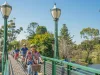
The city centre is walkable, compact, and safe, from the North Terrace boulevard, where you can spend a whole day exploring arts and cultural institutions, Adelaide Botanic Garden, the National Wine Centre of Australia, and Adelaide Zoo, as well as some of the state’s most beautiful heritage architecture, to burgeoning laneways full of bars and restaurants serving up South Australian wines and artisan produce.
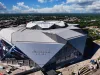
You have shopping and entertainment in Rundle Mall, the longest outdoor pedestrian mall in the Southern Hemisphere, you can watch a game or concert at the iconic Adelaide Oval, or you can ride and walk along the River Torrens all the way along to the hills or the other way to the coast.
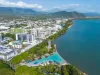
Just a short tram ride away, Glenelg is in the middle of a long stretch of pristine sandy coastline with a calm blue ocean and sunsets over the water, ice creams, fishing on the jetty, and catamaran cruises.
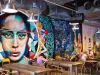
Slightly north, you reach Port Adelaide, where heritage meets edge with breweries in restored wool stores, featuring street art, maritime history, and kayaking alongside dolphins.
Every district has its own personality, and the ability to access them with such ease gives visitors a richer, more spontaneous experience.

“Every district has its own personality, and the ability to access them with such ease gives visitors a richer, more spontaneous experience”
Gemma Nelson, Advisor, Tourism industry Development, Adelaide Economic Development Agency
How does Adelaide’s unique character and strategic location set the city apart?
GN: Adelaide is beautifully balanced, being sophisticated yet relaxed, cultured yet unpretentious. Visitors don’t have to choose between world-class wineries or beaches, nature or nightlife. In Adelaide, you can do all of that – often in the same day!
Our strategic location puts us within minutes of pristine beaches and award-winning wineries, and we’re completely surrounded by the world’s only metropolitan parklands.
The scale of the city gives people time back because it has little traffic, no queues or stress, and room to breathe.
It’s a place where visitors can feel connection with locals, operators, and the landscape. Unlike larger destinations, our hospitality feels genuinely personal.
In your opinion, what is Adelaide’s most underrated attraction?
GN: I love Adelaide Central Market! It’s the heart and soul of who we are – multicultural, full of energy and stories, and home to an incredible array of world-class cuisines, all fuelled by fresh produce and wine sourced directly from our surrounding regions.
It’s also located right next to Chinatown, which has an excellent eclectic mix of Asian cuisines to suit any budget and occasion.
Beyond the market, some of the city’s most memorable moments happen in the places you don’t find in a brochure but in hidden laneways such as Vardon Avenue and Peel Street – tiny bars, tucked-away restaurants, and independent galleries and makers.
JamFactory is an excellent example of collaborative workspace bringing together experts in arts and crafts, including glass blowing, which you can watch for free. Those unexpected discoveries are what stay with people long after they leave.

How will the AEDA Strategic Plan 2024/25 – 2028/29 increase foot traffic, spending, and investment?
GN: AEDA’s strategy is focused on activating the city, attracting investment, and driving measurable economic outcomes.
We’re developing tourism products and experiences to encourage longer stays and gain growing recognition as a city not to be missed on any Australian itinerary.
We’re working with industry to attract new businesses to the city, from hospitality and retail through to innovative start-ups and entrepreneurs via our Strategic Partnerships Programme and are also working with Council to achieve its growth target of 50,000 residents by 2036.
We use real-time data on visitation, spend, and pedestrian movement to shape decisions and allocate resources where they have the most impact.
We work closely with Business Events Adelaide as a strategic partner, helping to bring high-yield business events into the city which drive midweek and off-peak visitation and convert business travellers into leisure visitors.

Can you talk about the AUD$10+ billion of city-shaping projects on the horizon?
GN: It’s an incredibly transformative period for Adelaide. The Central Market Arcade redevelopment and expansion will evolve the precinct into a world-class market district, creating new hospitality, retail, residential, hotel, and public spaces whilst protecting what locals love most about the market today.
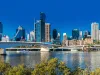
The Riverbank and Festival Plaza precinct has undergone a major upgrade in the last few years, connecting the cultural, sporting, and entertainment spine of the city with redeveloped, expanded venues such as the Adelaide Convention Centre, Adelaide Oval, and SkyCity Adelaide, with new commercial offices and university buildings further activating these spaces.
Several new international-standard hotels have recently opened or are under development and will attract more diverse visitation and support our growing events calendar.
Beyond these landmark projects, more than AUD$10 billion in city-shaping investment is either underway or on the horizon. Major mixed-use precincts, next-generation biomedical and research facilities, and new commercial towers are redefining Adelaide’s skyline and expanding the city’s innovation footprint.
The Lot Fourteen innovation district continues to accelerate growth in space, defence, cybersecurity and creative industries, drawing global companies and talent into the CBD. Similarly, the BioMed City cluster is strengthening Adelaide’s position as a leader in health, medical research, and advanced manufacturing, with continued investment supporting high-value jobs and commercialisation opportunities.
Large-scale residential developments are also helping reshape the city, accommodating population growth and driving new life into key corridors.
Strategic investment in transport, digital infrastructure, and public realm upgrades is improving connectivity, sustainability, and liveability across the CBD and inner suburbs.
Collectively, these projects are not only changing Adelaide’s physical form but also elevating its economic performance, cultural vibrancy, and global competitiveness – setting the city up for its next era of growth.
Major expansion of Adelaide Airport (ADL) and new direct international routes – including recently announced non-stop flights to San Francisco and Shanghai – mean Adelaide is becoming increasingly globally connected.
“Visitors come for the food, wine, culture, and nature, but they also return because of how Adelaide makes them feel! The future is bright, and we’re only just getting started”
Gemma Nelson, Advisor, Tourism industry Development, Adelaide Economic Development Agency

What impact do major global events have on Adelaide’s visitor economy?
GN: Major international events are huge economic drivers for the city and state. They fill hotels, activate our streets, drive spend into restaurants, shops, and tourism operators, and encourage visitation to our incredible regions.
Adelaide doesn’t just host events – we transform for them! The city comes alive and visitors truly feel immersed. Nowhere does festivals like Adelaide, and you just need to be here to experience something like Adelaide Fringe Festival, WOMADelaide, LIV Golf, Tour Down Under, or the Ashes – to name a few – to understand the buzz and vibrancy of the city.
These types of events draw international media coverage and huge visitor audiences and are case studies on a global stage for how to do events well in the realms of sustainability and accessibility.

Finally, are you optimistic about the future of Adelaide’s tourism industry?
GN: I might be biased because I genuinely love Adelaide, but yes, I am incredibly optimistic!
We have momentum and we’re attracting new experiences, airlines, events, and major private and public investment.
Our industry is highly collaborative, our offering is authentic, and our city is evolving with confidence.
Visitors come for the food, wine, culture, and nature, but they also return because of how Adelaide makes them feel! The future is bright, and we’re only just getting started.