


Tourism Tropical North Queensland (TTNQ) celebrates its 50th anniversary in 2025 and continues to thrive as the regional tourism organisation. We speak to Mark Olsen, CEO, about how TTNQ brings together the industry and community to drive the value of the visitor economy through destination marketing.
Q&A WITH TOURISM TROPICAL NORTH QUEENSLAND
Firstly, can you talk us through the origins of TTNQ and its initial vision?
Mark Olsen, CEO (MO): The origins of TTNQ stretch back to the 1960s when a group of Cairns business owners formed a development bureau to attract investment to the region. The organisation was formally registered on 12th September 1975 as the Far North Queensland Development Bureau Limited.
Recognising tourism as the region’s greatest economic opportunity, the bureau changed its name in August 1978 to the Far North Queensland Promotion Bureau Limited. In 1998, the organisation underwent another transformation to TTNQ, aligning with the evolving destination brand of Tropical North Queensland.
The early vision was to attract visitors to the region, create new business opportunities, and grow the visitor economy. This ambition helped Cairns secure a locally owned international airport, which was the catalyst for the growth in international tourism, transforming Tropical North Queensland into one of Australia’s key global destinations.
What are your organisation’s current set of priorities and goals that you are aiming to achieve?
MO: Our mission is for every visitor to leave as a custodian of Tropical North Queensland and its stories, sharing their experience globally to drive future visitation.
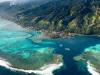
As a destination marketing organisation (DMO), we are proud to promote the only place on earth with two UNESCO World Heritage Sites side by side. Working with industry, science, and Traditional Owners, we also play a role as a custodian of the Great Barrier Reef and one of the world’s oldest rainforests. That is why it’s so important this philosophy is reflected in our marketing.
Our overarching vision is for the destination to be a global leader in nature-based ecotourism, driving visitor spend.
How are you currently marketing Tropical North Queensland as a destination and what, for you, represents the essence of the location?
MO: Tropical North Queensland is a year-round, tropical nature-based destination with distinct seasons that bring different experiences.
Winter has long been a favourite with Australian travellers looking for a tropical escape from the colder southern climate.
Additionally, summer marks a period of regeneration, beginning with the annual coral spawning in November.
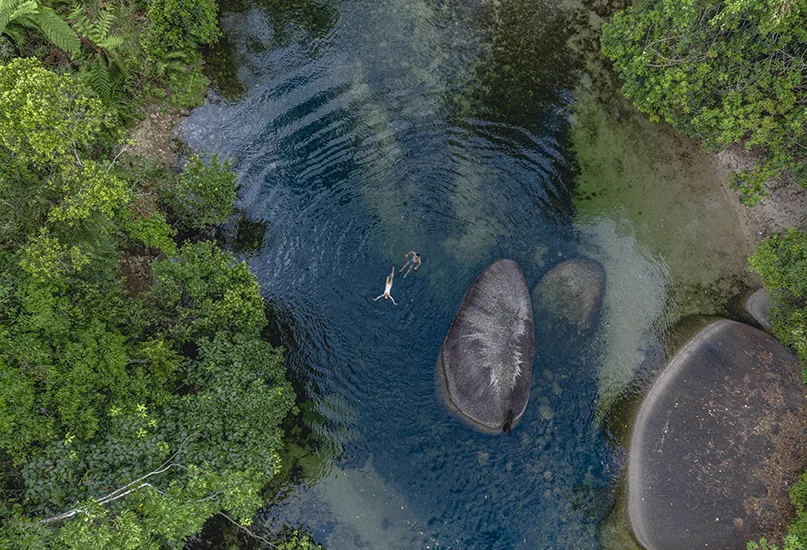
Mangoes are in season, the wildlife becomes active, and the warm rain greens the rainforest and outback, whilst topping up the waterfalls and swimming holes.
Can you tell us more about the launch of the Lifetime of Greatness project?
MO: The Great Barrier Reef drives international visitation to Australia and needs visitors to ensure it is well cared for by the science community and the tourism industry, who monitor it every day and undertake stewardship activities to protect its health.
Every visitor contributes financially to the management of the Great Barrier Reef, and once they have seen this diverse ecosystem, they understand its resilience and want to play a role in its future.
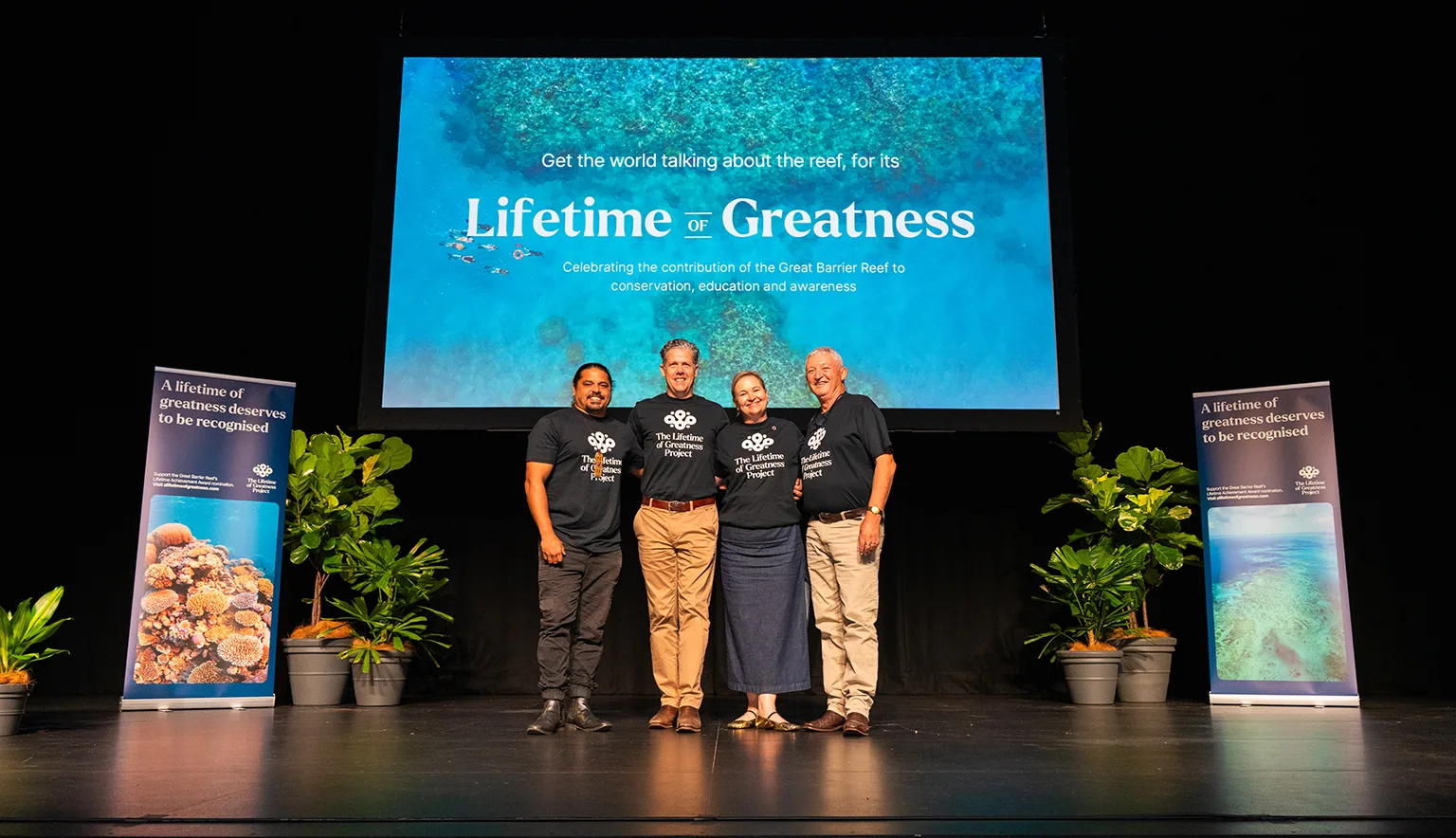
TTNQ launched the Lifetime of Greatness project in April 2025 alongside Traditional Owners, marine biologists, the tourism industry, and reef guardian schools to show the profound impact the Great Barrier Reef has on both the environment and the people who visit it.
The world’s largest living organism is the beating heart of the ocean, supporting more than 9,000 different species and forming one of the most biodiverse ecosystems on Earth.
It inspires people every day, bringing individuals together through sustainable initiatives, shaping cultures and communities across generations.
The campaign invited the world to recognise the reef’s extraordinary contribution by nominating it for the UN Environment Programme (UNEP) Lifetime Achievement in the Champions of the Earth Awards.
More than 1.3 million people across the globe signed in support, which is a remarkable show of advocacy and love for the Great Barrier Reef.
Why, in your opinion, should someone visit Tropical North Queensland and what should be their top priorities?
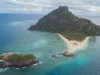
MO: Tropical North Queensland has the greatest access to the Great Barrier Reef and the bonus of one of the world’s oldest tropical rainforests alongside it.
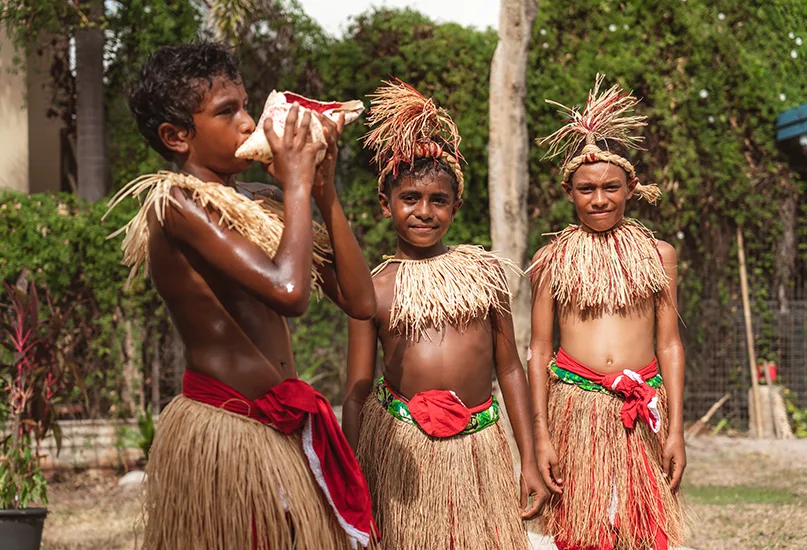
These extraordinary natural landscapes can be experienced with the world’s two oldest living cultures – the Aboriginal and Torres Strait Islander peoples – whose ancient wisdom has been preserving the environment long before it was awarded UNESCO World Heritage status.
Visitors have the unique opportunity to walk with a Traditional Owner to discover how the rainforest is their supermarket, pharmacy, and hardware store and join a Master Reef Guide to discover what is so special about the only living structure that can be seen from the moon.
What are some of the region’s most unique landmarks you would like to highlight?
MO: The Daintree Rainforest, which is part of the Wet Tropics Rainforest, is a UNESCO World Heritage Site recognised globally as one of the world’s oldest continuously surviving tropical rainforests.
It is home to living dinosaurs such as the southern cassowary and the saltwater crocodile and boasts a mind-boggling number of species – 40 percent of Australia’s bird species, 35 percent of mammal species, 65 percent of fern species – the list goes on.
The Daintree Rainforest is a living museum and home to the Kuku Yalanji people. Is it any wonder that Sir David Attenborough regards Tropical North Queensland as his favourite place to visit? To quote the great man, “It has, for a naturalist, everything. It has an amazing rainforest which is quite unlike any other rainforest in the world. Not only does it have that, but down on the coast it has the Great Barrier Reef.”
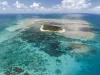
The Ribbon Reefs, north of Port Douglas, are extraordinary. They are on the edge of the continental shelf, but still accessible and home to spectacular coral formations and marine life.
They are famous for being the only place in the world where you are permitted to swim with dwarf minke whales. These curious and friendly whales visit the reef in June and July and only a handful of vessels have permits to swim with them, making it a very exclusive experience.
Similarly, what is one of the most underrated landmarks or attractions that you would like to showcase?
MO: I have a deep personal connection with the Wet Tropics Rainforest. Many people assume this is the Daintree Rainforest alone, but it is just one of the 29 national parks that make up this stunning landscape that stretches north, south, and west of Cairns.
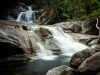
My wife’s family is from Babinda, south of Cairns, where you will find the serene beauty of the Babinda Boulders and Josephine Falls, popular spots for locals to cool off.
I spend my Sundays at the family property where we are revegetating former farmland back to its natural state and am privileged to see the resident cassowary family enjoying the fruits of our labour most weekends.
What current trends are transforming the tourism industry in Tropical North Queensland and how are you utilising and responding to them?
MO: Thoughtful travellers are seeking transformational experiences where they can tread lightly, give back to the environment and community they are visiting, and leave knowing that their visit has made a difference.
Tropical North Queensland is where you can not only see great, but you can also leave greater. Our region’s tourism industry is highly engaged with the environment their business operates in. The natural beauty and ecological values of Tropical North Queensland is why we are here. We love it and want the world to appreciate it the way we do.
Travel to the Great Barrier Reef knowing that your visit has directly contributed to its conservation and supported a business that is investing in its health. Take it a step further and participate in a citizen science programme helping marine biologists to monitor the diverse species on the reef.
Explore the rainforest with a Traditional Owner, as supporting their business allows our First Nations people to retain their connection to country, care for the environment that has nurtured their family for generations, and share their ancient culture with the world, creating employment for the next generation.
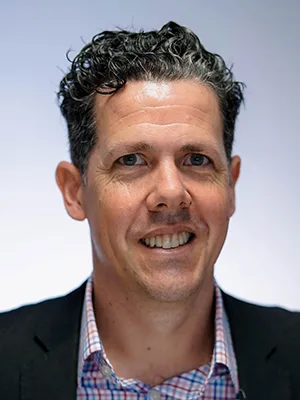
“Tropical North Queensland has what the world wants – transformational experiences in a stunningly beautiful, biodiverse environment”
Mark Olsen, CEO, Tourism Tropical North Queensland
What challenges does the tourist industry in Tropical North Queensland face and how will these be overcome?
MO: Public perception is often our greatest challenge. Australia, like many other countries, has been impacted by significant weather events that attract global media coverage. The impact of these events can be immediately devastating to a community, but they are isolated and should not impact travel to nearby communities that are unaffected.
Call your accommodation direct to ask if there is an impact in the area you are visiting and continue with your travel plans if they say it is safe. If they are affected, ask if you can delay your travel until it is safe. Often, the impact of cancellations on a community is worse than the disaster itself.
Reports on the health of the Great Barrier Reef can become quite skewed by the time they reach the other side of the world, with confusing statistics misreported or taken out of context.
Our oceans are warming, and this is impacting marine environments with more frequent setbacks. However, the Great Barrier Reef is resilient and areas that have been impacted in the past by events such as bleaching have recovered. Scientists and the tourism industry have been working together to look at how recovery can be encouraged in areas that have been heavily hit.
There is no simple solution, but the Great Barrier Reef continues to give birth each year with the annual coral spawning – surely the greatest sign that this biodiverse ecosystem is resilient. Visit for yourself to understand why we have such high hopes for the Great Barrier Reef.
Could you talk about the organisation’s 50-year anniversary and what this significant milestone represents?
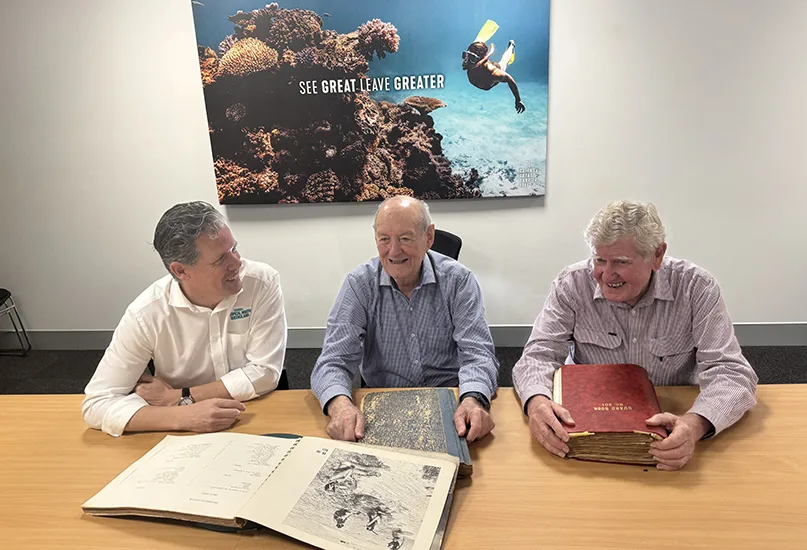
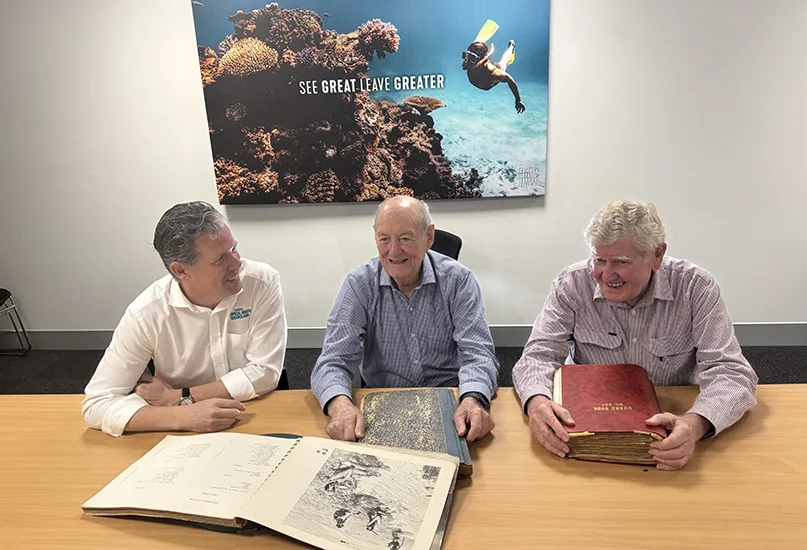
MO: Chalking up half a century of attracting visitors to a destination is a significant milestone. TTNQ’s founders – Chairman, George Chapman and General Manager, Bill Cummings – had extraordinary vision and are still active in the industry into their 80s.
They recognised the opportunity that growing road and aviation connectivity offered the destination and built a culture of working together for the betterment of the industry, the environment, and the community.
That philosophy of working together for the greater good has been the backbone of our destination marketing organisation for five decades.
TTNQ is the oldest regional DMO in Australia and the largest, supported by an enthusiastic membership base.
Our success in establishing Tropical North Queensland as an international Australian destination is the direct result of our ability to hunt as a pack.
Our industry works together to promote Tropical North Queensland as a destination, and we remain resilient and grasp every setback as an opportunity to innovate, making sure that the rest of the world loves our backyard as much as we do.
“Our industry works together to promote Tropical North Queensland as a destination, and we remain resilient and grasp every setback as an opportunity to innovate, making sure that the rest of the world loves our backyard as much as we do”
Mark Olsen, CEO, Tourism Tropical North Queensland
To date, what are you most proud of regarding the tourist board’s body of work?
MO: TTNQ has been a leader in the sustainability space for decades, helping our industry to grow in a way that benefits our community, people, environment, and economy.
We have achieved many firsts in this space to bring our members along on the journey, such as introducing an accessibility hub and a sustainability hub to our destination website, developing a First Nations Tourism Action Plan in collaboration with our Indigenous operators, launching a Sustainability Leaders Network, and completing our annual Sustainability Report.
Tropical North Queensland has the most certified tourism operators of any region in Australia, and we continue to innovate in this space. Meanwhile, Tropic Wings is Australia’s first tour operator with an electric fleet, and the Quicksilver Cruises Group has converted all its marine engines ready for the new generation of sustainable fuels.
Finally, are you optimistic about the future of the tourism industry for Tropical North Queensland?
MO: Yes! Tropical North Queensland has what the world wants – transformational experiences in a stunningly beautiful, biodiverse environment. Our community embraces tourism as a benefit, so visitors are guaranteed a warm welcome, and we are caring for our environment to ensure that it is here for the pleasure of generations to come.




















 celebrates its 50th anniversary in 2025 and continues to thrive as the regional tourism organisation. We speak to Mark Olsen, CEO, about how TTNQ brings together the industry and community.)